jianguli@goodlyglue.com
+86-18948072250

Plywood that looks flat and strong at the press exit can still fail later in trimming, sanding, storage, or end use. The visible symptom is separation between veneer layers, but the real cause is usually a process imbalance rather than one single defect. In factory practice, delamination appears when wood condition, adhesive behavior, layup discipline, and hot pressing no longer work as one system. That is why this problem remains important across the wood panel production industry, especially when output targets rise and tolerance windows become tighter. According to FAO, global wood-based panel production reached 381 million m³ in 2023, while trade fell 7 percent to 84 million m³, which means manufacturers are under growing pressure to keep quality stable while controlling cost and throughput.
When a panel opens after pressing, many teams first suspect the resin. In reality, the plywood delamination issue often starts earlier, at veneer preparation or glue application. The USDA Wood Handbook notes that moisture control is especially critical in hot pressing because excess moisture can turn into high-pressure steam inside the panel, create internal voids, and even prevent full cross-linking of thermosetting adhesives. The same reference also explains that excessive adhesive mobility can cause squeeze-out, overpenetration, and bond starvation.
This matters because plywood bonding depends on a balanced interface. Too little adhesive leaves dry areas. Too much mobility pushes resin away from the bondline. Excess water weakens cure. Poor veneer surface condition limits contact. By the time the panel exits the press, the defect may already be locked inside.
Moisture is one of the first checkpoints. GOODLY lists an optimal timber moisture range of 8 to 10 percent for its Plywood Urea Formaldehyde Glue Powder, which aligns with the general need for controlled hot-press bonding. When veneer moisture is too high, steam pressure rises during pressing. When it is too low, adhesive transfer and wetting can become uneven, especially on absorbent or rough surfaces.
APA manufacturing standards for laminated wood products identify adhesive spread rate as a key qualification factor, together with lamination moisture content, clamping pressure, assembly time, and wood surface temperature. Uniform spread matters because bondlines fail first where coverage is thin, interrupted, or inconsistent across the panel width.
Open assembly time is often underestimated. FPInnovations reports that an excessively long assembly time approaching 20 minutes or more can significantly affect bonding, especially when veneer or ambient temperatures are high. In real production, this can translate into glue dry-out before pressing, poor transfer, and weak internal bonding.
GOODLY recommends a hot-pressing temperature of 80 to 120°C, pressure of 8 to 16 kg/cm², and a pressing time of about 1 minute per millimeter of board thickness for its plywood uf resin powder. If the press cycle is too mild, cure remains incomplete. If pressure is poorly distributed, contact between veneers becomes inconsistent. If the cycle is too aggressive for the moisture condition, steam-related defects can increase.
Dust, torn grain, contamination, roughness, and thickness variation can all reduce contact quality. APA notes that satisfactory bonding surfaces are typically free from dust and foreign matter that are detrimental to adhesive bond performance. A clean and consistent surface gives the resin a better chance to form a continuous bondline instead of isolated bonded spots.
Even though delamination is usually a process-chain defect, resin choice still determines how much process variation the panel can tolerate. GOODLY states that its UF powder is formulated to balance curing rate and adhesive strength, and that melamine-modified systems improve water resistance, bond strength, and durability for more demanding uses. This matters when panels face higher humidity, longer storage cycles, or stricter performance targets.
For many interior plywood applications, a well-formulated plywood glue powder can deliver stable bonding efficiency and production speed. For higher moisture resistance needs, MUF systems can provide a wider safety margin. The practical point is simple: adhesive selection should match panel use conditions, veneer condition, and plant process capability, not just target cost.
| Control point | What to watch | Why it affects delamination |
|---|---|---|
| Veneer moisture | Keep moisture stable and close to adhesive recommendation | Too much moisture can create steam pressure and incomplete cure |
| Glue spread | Maintain even coating across the full veneer surface | Thin or missed areas create weak bondlines |
| Assembly time | Avoid long waiting time before hot press | Glue dry-out reduces transfer and bond formation |
| Press temperature | Match resin curing window | Low temperature can leave the resin under-cured |
| Press pressure | Ensure full contact without excessive squeeze-out | Poor pressure causes gaps, while excess pressure can starve the bond |
| Surface condition | Remove dust and keep veneer thickness consistent | Contamination and uneven contact weaken adhesion |
The table looks simple, but this is where most post-press failures begin.
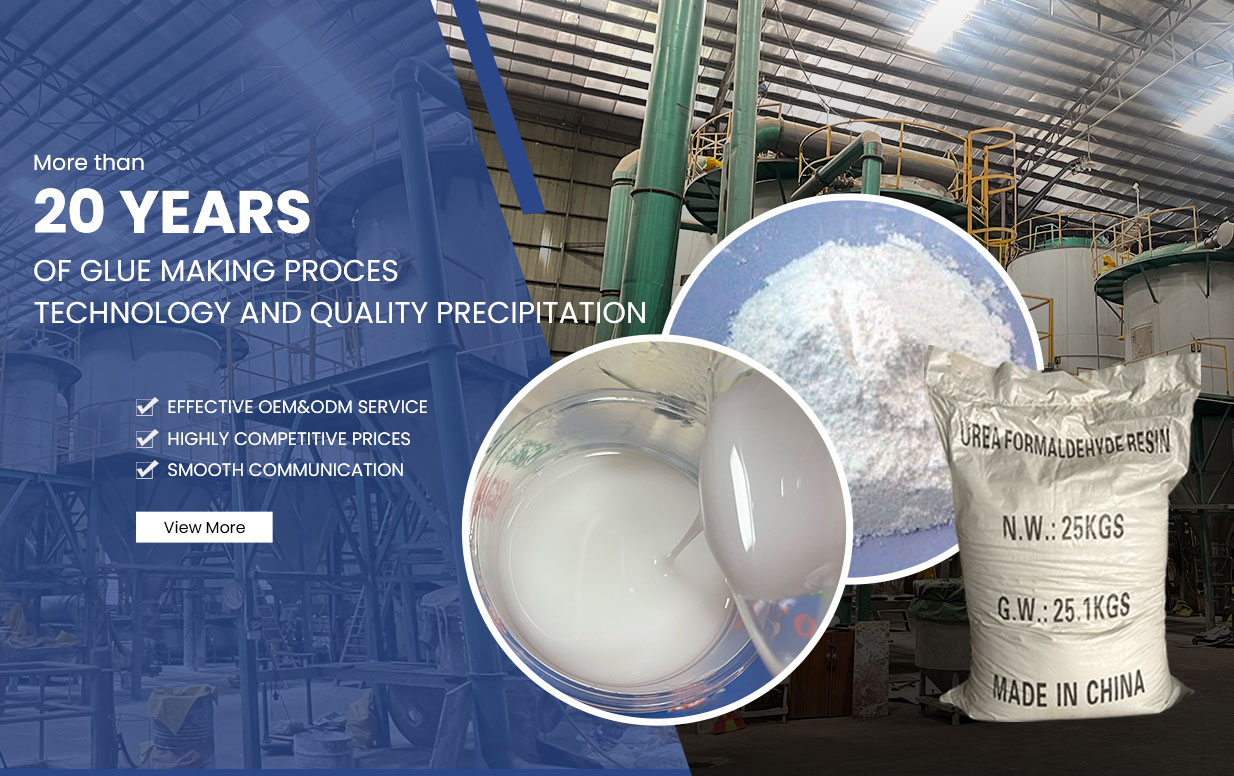
From a manufacturing perspective, adhesive stability is not only about chemistry. It is also about how predictable the product is on the line. GOODLY presents itself as a specialist manufacturer with more than 20 years of glue-making experience, founded in 1998, with a focus on customized formulations, technology upgrades, and consistent resin powder performance. Its product range covers UF systems for plywood and MUF options for higher moisture resistance applications.
That combination is valuable when plants need a wood glue powder that fits actual processing conditions rather than a one-size-fits-all formula. Stable powder dissolution, suitable curing response, and formulation adjustment around pressing conditions can all help reduce the chance that a bonding failure adhesive complaint will appear later in finishing or shipment. GOODLY also specifies practical use conditions such as timber moisture, hot-press temperature, pressure, and curing agent range, which supports more disciplined process control on the shop floor.
To prevent plywood delamination issues, plants should treat adhesive and process control as one system. Start with veneer moisture and surface preparation. Then verify glue mix consistency, spread rate, and assembly time. Finally, align press temperature, pressure, and cycle time with the resin design. The goal is not only higher bond strength on day one, but also bond durability after storage, cutting, transport, and service exposure.
Plywood does not delaminate by accident. It delaminates when the bondline is asked to carry more stress than the process allowed it to develop. Stronger process discipline, matched resin selection, and a supplier that understands plywood manufacturing conditions are the most reliable way to keep panels intact after pressing.