jianguli@goodlyglue.com
+86-18948072250

Selecting the right adhesive for veneer lamination process has a direct effect on bond strength, panel appearance, press efficiency, emission compliance, and long-term product stability. In veneer lamination, the adhesive is not only a bonding medium. It also influences how smoothly the veneer lays down, how clean the surface remains after pressing, and how well the finished panel performs during cutting, edging, transport, and final use. For manufacturers serving the decorative panel manufacturing industry, adhesive selection is a process decision that affects both product quality and production cost. The global wood products market is also becoming more quality-driven. FAO reported that global exports of wood and paper products reached 486 billion dollars in 2024, while production increased across most wood-based product categories, including a 4 to 5 percent rise in wood-based panels, paper, and paperboard. That trend puts more pressure on panel producers to maintain stable lamination standards at scale.
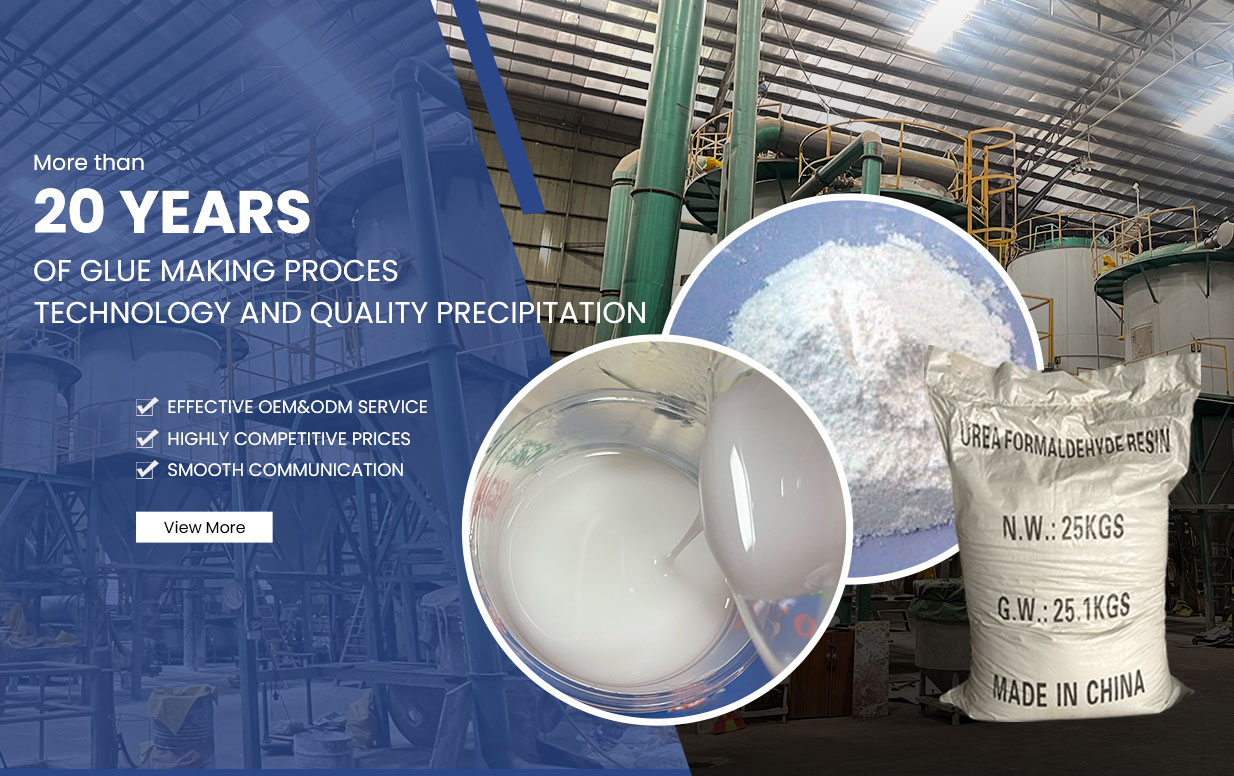
Before choosing a veneer lamination adhesive, define where the finished panel will be used and what performance it must deliver. Interior furniture panels, cabinet components, wall panels, door skins, and decorative boards do not all require the same adhesive balance. Some lines need fast press response for high output. Others need better heat resistance, longer working time, or stronger surface stability after machining. If the end product is mainly for interior dry use, a properly formulated UF system can be a highly efficient option because it gives strong bonding, smooth spreading, and cost-effective processing. GOODLY focuses on Urea Formaldehyde Resin Powder and customized resin adhesive solutions, with more than 20 years of glue-making experience and a product range that covers both UF and MUF materials for multiple wood applications.
Adhesive performance changes with substrate density, surface absorbency, veneer thickness, veneer moisture, and texture. A porous core can draw adhesive too quickly, while a dense and smooth core may require better surface wetting and coating control. Veneer species also matters because different grain structures absorb glue differently and react differently under heat. A good wood veneer glue should create a uniform glue line without bleed-through, dry spots, or veneer bubbling. That is why the correct adhesive is not only about chemistry. It is also about how the formula matches the panel structure and plant conditions. GOODLY positions its veneer glue powders as solutions for furnishings, interiors, and decorative surface applications, with tailored products for specific customer needs.
A practical adhesive choice must fit your actual line speed and hot press settings. GOODLY lists operating guidance for its Wood Veneer Stick Glue Powder that includes optimal timber moisture of 8 to 10 percent, hot pressing temperature of 80 to 120 degrees Celsius, hot pressing pressure of 8 to 16 kilograms per square centimeter, hot pressing time of 1 minute for each millimeter of board thickness, and a general single-side coating quantity of 150 to 180 grams per square meter. Those figures are useful because they show the adhesive was developed with process control in mind, not only bond claims. In a factory environment, stable pressing windows reduce rework, edge lifting, blistering, and inconsistent output from shift to shift.
Emission standards are now a core part of adhesive selection, especially for interior panels that may enter regulated markets. The US EPA states that under TSCA Title VI, hardwood plywood, MDF, and particleboard are regulated composite wood products. The EPA emission limit for hardwood plywood is 0.05 parts per million, while particleboard is limited to 0.09 parts per million and MDF to 0.11 parts per million. The EPA also states that after March 22, 2019, regulated composite wood products sold or imported in the United States must be labeled as TSCA Title VI compliant. For veneer lamination lines producing decorative boards on regulated cores, adhesive selection must support the compliance strategy of the whole panel system. This is one reason why consistent resin quality and formulation control matter so much in adhesive for veneer lamination.
| Selection factor | What to evaluate | Why it matters |
|---|---|---|
| Bond strength | Peel resistance, surface hold, edge stability | Prevents delamination during cutting, transport, and use |
| Press adaptability | Temperature range, pressure range, curing speed | Supports stable output and reduces downtime |
| Veneer appearance | Bleed-through control, smooth glue line, clean finish | Protects decorative value of natural or engineered veneer |
| Core compatibility | Bonding performance on plywood, MDF, particleboard, decorative boards | Improves process consistency across product lines |
| Moisture and heat performance | Surface stability after pressing and finishing | Reduces customer complaints in service conditions |
| Compliance support | Low-emission production targets and documentation readiness | Helps panels meet market requirements |
| Pot life and mixing convenience | Working time after blending, tolerance to line rhythm | Lowers waste and improves daily operations |
The table above reflects the reality that selecting a veneer lamination adhesive is a full process decision, not a single lab value decision. GOODLY also provides product instructions that include curing agent ratios, blended glue waiting time, and activity periods, which helps plants manage shop floor repeatability more effectively.
Powder resin systems continue to be widely used because they support storage efficiency, flexible mixing, and practical transport for wood panel factories. GOODLY lists a shelf life of 1 year and a standard package weight of 25 kilograms for its veneer glue powder. On the same product page, the company also provides mixing guidance using room-temperature water and notes different activity periods depending on whether curing agent or industrial flour is added. For manufacturers, this kind of information is valuable because adhesive stability is not only about final bond strength. It also affects batching, operator control, waste rate, and production planning. When the resin behaves predictably from batch to batch, the veneer line becomes easier to manage.
The best adhesive supplier is not only a material seller. It should understand substrate differences, pressing conditions, climate variation, and the surface quality required by finished decorative panels. GOODLY states that it offers tailored products for specific customer needs, runs independent production workshops and product development teams, and continues upgrading its technology and equipment to meet global market demand. For buyers evaluating long-term supply stability, those capabilities matter because veneer lamination often requires adjustment by product type, season, and line speed. A supplier with development capacity can support finer tuning rather than forcing every customer into the same standard formula.
A simple way to choose veneer lamination adhesive is to move through four checkpoints. First, define the performance target of the finished panel, including appearance, bond durability, and compliance needs. Second, match the adhesive to the core board, veneer species, and finishing route. Third, confirm that the resin works within your real press window and coating practice. Fourth, validate consistency through pilot runs, not only technical data sheets. GOODLY already presents process-linked data for veneer bonding and positions its products for furniture, interior decoration, retail display, custom joinery, and other decorative surface uses. That makes it easier to start from an application-oriented evaluation rather than a generic glue comparison.
Selecting the right veneer lamination adhesive is really about protecting the full value of the panel. A stable glue system supports cleaner surfaces, stronger bonding, smoother pressing, better compliance readiness, and lower production risk. For manufacturers looking for a reliable veneer lamination adhesive, GOODLY combines long-term uf resin experience, customized development, and practical process guidance that aligns well with modern decorative panel production. When adhesive choice is made with the final panel, the production line, and the market standard all in view, the result is more consistent quality and a more competitive product.