jianguli@goodlyglue.com
+86-18948072250

formaldehyde emissions from wood panels are influenced by resin chemistry, adhesive dosage, wood moisture, pressing conditions, panel density, and post-production storage. Adding a Formaldehyde Scavenger to a urea-formaldehyde adhesive system can help capture or react with part of the residual formaldehyde. However, the additive must be selected and dosed carefully so emission reduction does not create slower curing, weak bonding, or unstable production.
Residual formaldehyde may remain in the resin or develop as the cured adhesive is affected by moisture and temperature. A scavenger introduces reactive components that bind or neutralize part of this formaldehyde before it can be released from the finished panel.
The result depends on the additive’s compatibility with the resin and its distribution throughout the glue mixture. Adding more material does not automatically produce lower emissions. Excessive dosage may change pH, viscosity, pot life, curing speed, or water resistance.
| Production Factor | Possible Influence |
|---|---|
| Resin formulation | Determines chemical compatibility |
| Additive dosage | Affects emission reduction and curing |
| Mixing uniformity | Controls distribution across the panel |
| Wood moisture | Influences curing and later emissions |
| Press temperature | Affects resin reaction and bond formation |
| Conditioning period | Influences test results after pressing |
The additive should be evaluated using the same resin, wood species, panel thickness, and pressing equipment planned for normal production. Results from a different board structure may not accurately represent another line.
Emission control must be balanced with panel strength. Before approving a formaldehyde control panel additive, the factory should compare internal bond strength, surface bond, thickness swelling, moisture resistance, and dimensional stability against a control panel.
Mixed-glue properties also require attention. A noticeable change in viscosity may affect spraying or roller coating, while a shorter usable period can cause premature curing in tanks and blenders. Gel-time testing helps determine whether the existing press cycle remains suitable after the additive is introduced.
A controlled trial should begin with the current panel formulation as the reference. Several additive levels can then be tested while resin spread, furnish moisture, mat weight, and press settings remain unchanged. This approach shows whether an improvement comes from the additive rather than from another production adjustment.
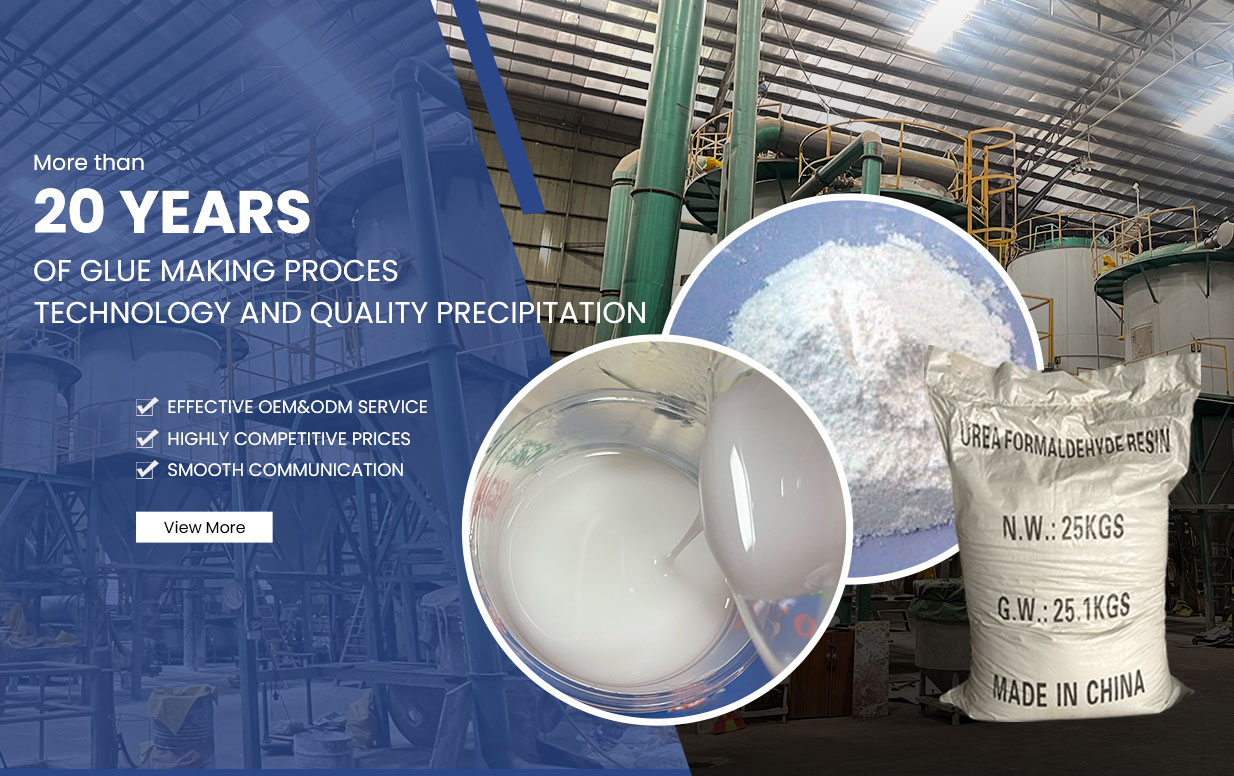
GOODLY supplies a powdered Formaldehyde Decomposer intended for addition to urea-formaldehyde resin glue. Actual dosage and processing guidance should be confirmed according to the selected resin grade and panel conditions rather than applied as a universal formula.
Wood panel compliance buyers should clearly identify the destination standard before requesting a low-emission formulation. Chamber testing, desiccator testing, gas analysis, and perforator methods measure formaldehyde differently and report results in different units. A result obtained under one method should not be presented as proof of compliance with every market.
Sampling and conditioning requirements are equally important. Panels should be tested after the specified conditioning period, with samples taken from representative press loads and board positions. Batch traceability allows the factory to connect test reports with resin, additive, wood furnish, and pressing records.
A suitable additive works most effectively when the wider production process is already under control. Calibrated weighing equipment, timed mixing, recorded glue preparation, stable wood moisture, and monitored pressing reduce variation between batches.
The purpose of a scavenger is to support repeatable emission management without sacrificing board performance. Compatibility trials, mechanical testing, representative emission analysis, and documented processing conditions give manufacturers a more reliable path toward meeting destination-market requirements.