jianguli@goodlyglue.com
+86-18948072250

Board rework often begins with small variations that are not detected early enough. Uneven glue distribution, unstable furnish moisture, incorrect preparation, delayed curing, or inconsistent pressing can produce panels that fail inspection only after sanding, cutting, lamination, or machining. A suitable resin powder can improve bonding repeatability, but the reduction in rework comes from matching the adhesive to the process and controlling how it is prepared and used.
A rejected panel represents more than wasted board material. The factory may also lose wood furnish, adhesive, energy, press time, sanding capacity, labor, packaging, and scheduled delivery space. When defective panels enter downstream processing, the cost rises because decorative paper, veneer, coating, or machining work may already have been added.
Common adhesive-related rework includes weak internal bonding, edge chipping, delamination, surface blistering, uneven curing, and poor dimensional stability. Each defect should be classified by production stage instead of being grouped under a general “glue problem.”
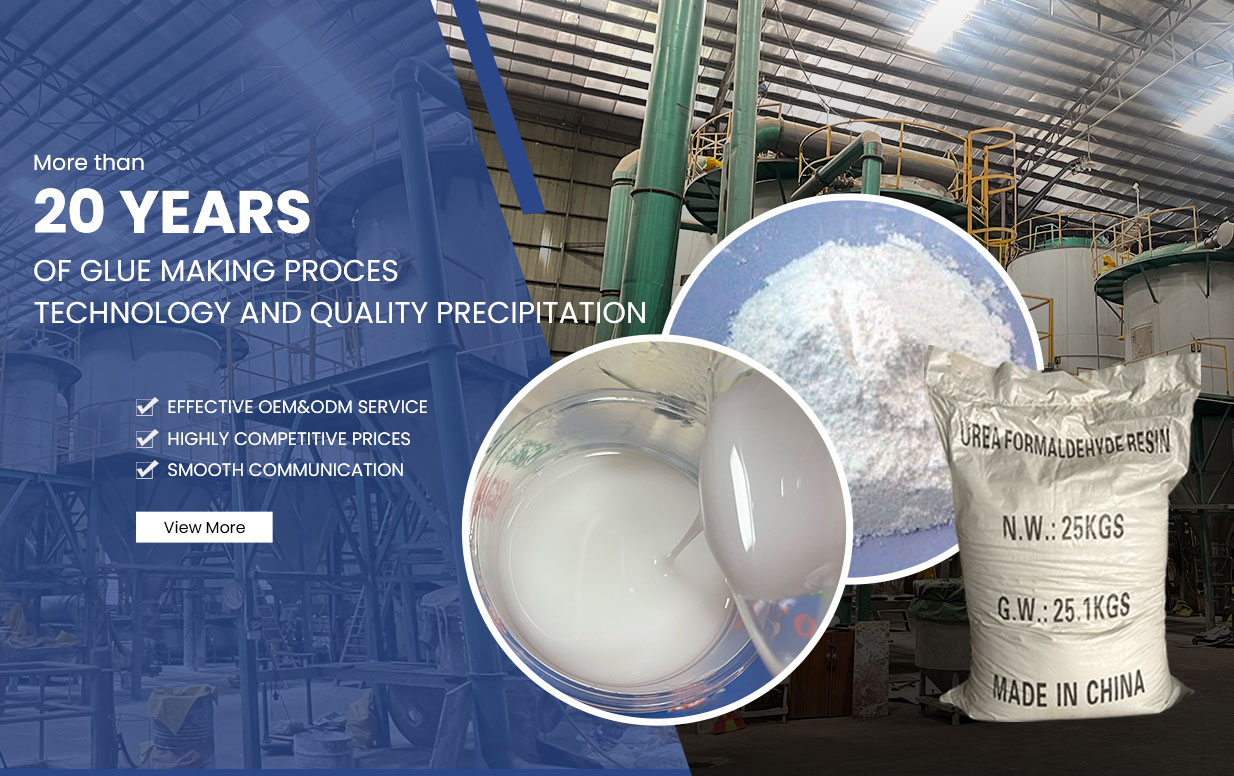
Powdered resin offers factories a defined material that can be prepared according to production demand. When the powder is stored correctly and measured accurately, the plant can control the water ratio, mixing procedure, additive dosage, and mixed-glue quantity more consistently.
Wood Adhesive Resin Powder should be selected for the actual panel structure and processing method. A resin suitable for veneer lamination may not behave identically in particleboard or MDF production. GOODLY supplies different powdered resin grades for wood bonding applications, making application information important before sampling and process confirmation.
| Production Variable | Possible Failure | Control Method |
|---|---|---|
| Incorrect water ratio | Weak or uneven bonding | Weigh water and powder for every batch |
| Incomplete mixing | Lumps and local dry areas | Use timed mechanical agitation |
| Excessive working time | Slow or unstable curing | Record preparation and expiry times |
| Uneven coating | Delamination or weak spots | Inspect spread rate across panel width |
| Unstable wood moisture | Blisters and bond variation | Test materials before production |
| Incorrect press cycle | Under-cure or brittle glue line | Record temperature, pressure, and time |
These controls allow technicians to compare failed and acceptable panels using real production evidence. Changing several parameters at once should be avoided because the factory will not know which adjustment improved or worsened the result.
The goal of a trial is not merely to produce one acceptable panel. It should identify a workable range for viscosity, coating quantity, assembly time, press temperature, and curing duration. Testing at the upper and lower edges of the intended settings shows how much normal production variation the adhesive can tolerate.
Trial panels should be conditioned before evaluation. Immediate testing may not reveal delayed separation, moisture movement, or strength development. Depending on the product, inspection may include internal bond strength, peel performance, thickness swelling, edge quality, and surface appearance.
Factories need traceability between resin batches, glue preparation records, wood material, press loads, and final inspection. Without that connection, recurring defects may look random even when they originate from the same condition.
Panel factory quality buyers should also compare supplier certificates with internal incoming inspection. Retained powder and finished-board samples provide reference material when a complaint appears weeks after production.
The most effective way to reduce wood panel rework is to identify deviations before the board reaches expensive downstream operations. Glue viscosity checks, furnish moisture limits, coating verification, and press-data monitoring can trigger corrective action while the material is still controllable.
Resin powder contributes to lower rework when it delivers consistent preparation and curing behavior within a clearly defined process window. Combined with suitable grade selection, accurate weighing, equipment maintenance, batch traceability, and early inspection, that consistency helps factories prevent defective panels instead of repeatedly repairing or downgrading them.