jianguli@goodlyglue.com
+86-18948072250

Glue preparation can become a production bottleneck when operators spend too much time adjusting concentration, breaking up lumps, cleaning tanks, or correcting inconsistent viscosity. Properly selected Wood Adhesive Resin Powder gives factories a defined starting material that can be measured according to each production batch. Its efficiency advantage, however, depends on storage, weighing, water addition, agitation, and working-time control.
Panels produced from the same wood material can still show different bonding results when adhesive preparation varies between shifts. One operator may add water too quickly, while another may shorten the mixing cycle or estimate the quantity without accurate weighing. These differences affect glue spread, curing behavior, and final board strength.
A standardized powder formulation allows the factory to create a repeatable preparation procedure. Operators can follow the same sequence, mixing duration, waiting period, and inspection points instead of correcting the glue through experience alone.
Water should be measured before preparation begins, and its temperature should remain reasonably stable. Part of the water can be placed in the clean tank before the powder is added gradually under continuous agitation. The remaining water is then introduced according to the approved procedure until the mixture reaches a uniform condition.
An easy mixing adhesive powder should disperse without persistent dry pockets, but equipment remains important. The mixer must generate enough circulation to move material from the wall and bottom of the tank. Dead zones can hold unmixed powder even when the surface appears smooth.
Powder and water weight for each batch
Water temperature and cleanliness
Powder addition speed
Agitation time and mixer speed
Final viscosity and appearance
Preparation time and usable deadline
Preparing more glue than the line can use within its working period increases the risk of viscosity drift or premature curing. Smaller, scheduled batches may reduce waste and keep adhesive properties more stable. The correct batch size should reflect coating speed, panel dimensions, downtime, and the number of active production lines.
Factories can improve panel production efficiency buyers care about by linking glue preparation with the daily press plan. When operators know the expected consumption per hour, they can prepare the next batch without interrupting coating or holding mixed adhesive for too long.
| Mixing Delay | Likely Cause | Process Improvement |
|---|---|---|
| Persistent lumps | Powder added too quickly | Use gradual, controlled feeding |
| Repeated viscosity adjustment | Inaccurate weighing | Install calibrated scales |
| Long tank cleaning | Adhesive left beyond working time | Schedule smaller batches |
| Uneven glue delivery | Settling or dead zones | Improve tank circulation |
| Frequent line stops | Mixing not linked to consumption | Use a preparation timetable |
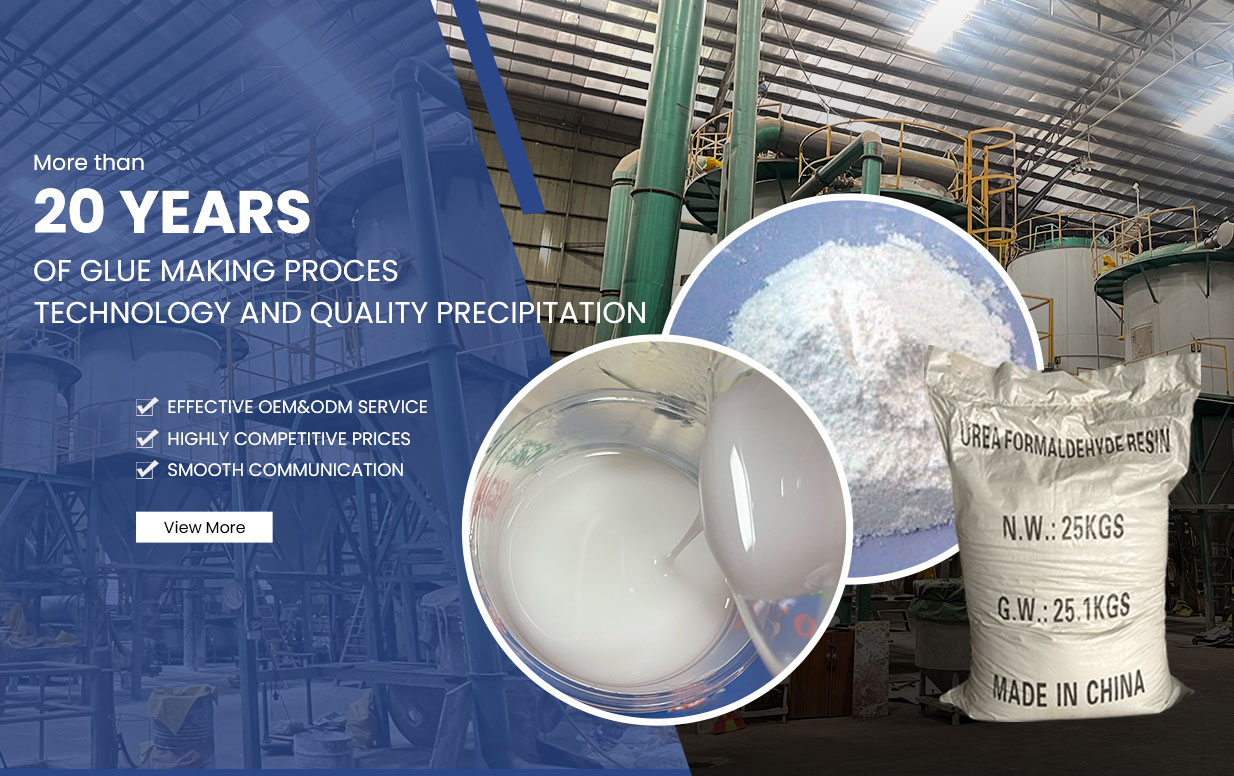
GOODLY offers powdered resin grades for particleboard, MDF, plywood, veneer bonding, and other wood applications. Selecting the grade according to the actual process helps avoid repeated on-site adjustments caused by using one adhesive for unsuitable production conditions.
Factories should record more than the recipe. Batch sheets can include operator, time, material lot, water quantity, viscosity, curing-agent dosage, and destination production line. These records help technicians compare adhesive preparation with later board inspection results.
Viscosity limits are particularly useful because appearance alone cannot show whether every batch has the same application behavior. When a result falls outside the approved range, the batch can be investigated before it reaches the coating system.
Efficient glue mixing is achieved through repeatable preparation rather than simply faster agitation. Accurate dosing, suitable equipment, controlled batch sizes, and traceable records reduce waiting time while giving the production line a more stable adhesive supply.