jianguli@goodlyglue.com
+86-18948072250

Muf resin powder is usually the better choice when plywood must withstand higher humidity, more demanding service conditions, or a more stringent performance target than standard interior panels. Adding melamine to the resin system can improve water resistance and bond durability, but the right decision still depends on the panel structure, veneer species, press conditions, and intended end use.
UF adhesives are widely used for interior wood products because they offer efficient bonding and practical cost control. They can be well suited to furniture components, interior plywood, and applications that will remain in relatively dry environments.
muf resin powder becomes more relevant when the bonded panel needs greater resistance to moisture or temperature changes. This may include plywood used in kitchens, utility areas, transport packaging, flooring structures, humid climates, or construction-related applications where occasional moisture exposure is expected.
The purpose is not to select the highest-performance resin for every panel. It is to match adhesive performance to real service conditions. Over-specifying the resin can increase production cost without creating meaningful value, while under-specifying it can lead to bond failure, delamination, or customer complaints after the panel is installed.
Plywood often contains multiple veneer layers, and every glue line needs to cure consistently under pressure. When moisture reaches the panel edge or surface, weakly protected bond lines may gradually lose strength. This risk becomes more significant when plywood is cut, drilled, exposed to changing humidity, or used in demanding indoor environments.
Consider MUF when the production requirement includes:
Improved resistance to moisture and humid storage conditions
More durable bonding for multi-layer plywood construction
Greater reliability after surface processing or edge machining
A panel specification that requires stronger bond retention
Higher expectations for long-term dimensional stability
A suitable muf resin powder for plywood should be evaluated with the actual veneer material and press process. Veneer moisture content, glue spread rate, hot-press temperature, pressing time, and panel thickness all influence the final bond result. Even a well-designed resin system needs appropriate operating conditions to deliver stable performance.
Resin selection should not create unnecessary pressure on the production line. A formulation with unsuitable working time may make veneer assembly difficult. Curing that is too slow can reduce press productivity, while overly rapid reaction may affect glue spreading or veneer positioning.
Our factory develops resin powders around practical wood-panel manufacturing conditions rather than treating all plywood applications as identical. We can discuss the required bond level, panel use, local climate, equipment capability, and existing workflow before recommending a formulation.
Wood panel factory buyers should also compare technical consistency between batches. Packaging integrity, powder dispersibility, mixing instructions, supply stability, and responsive application support all affect whether a resin performs reliably in daily production.
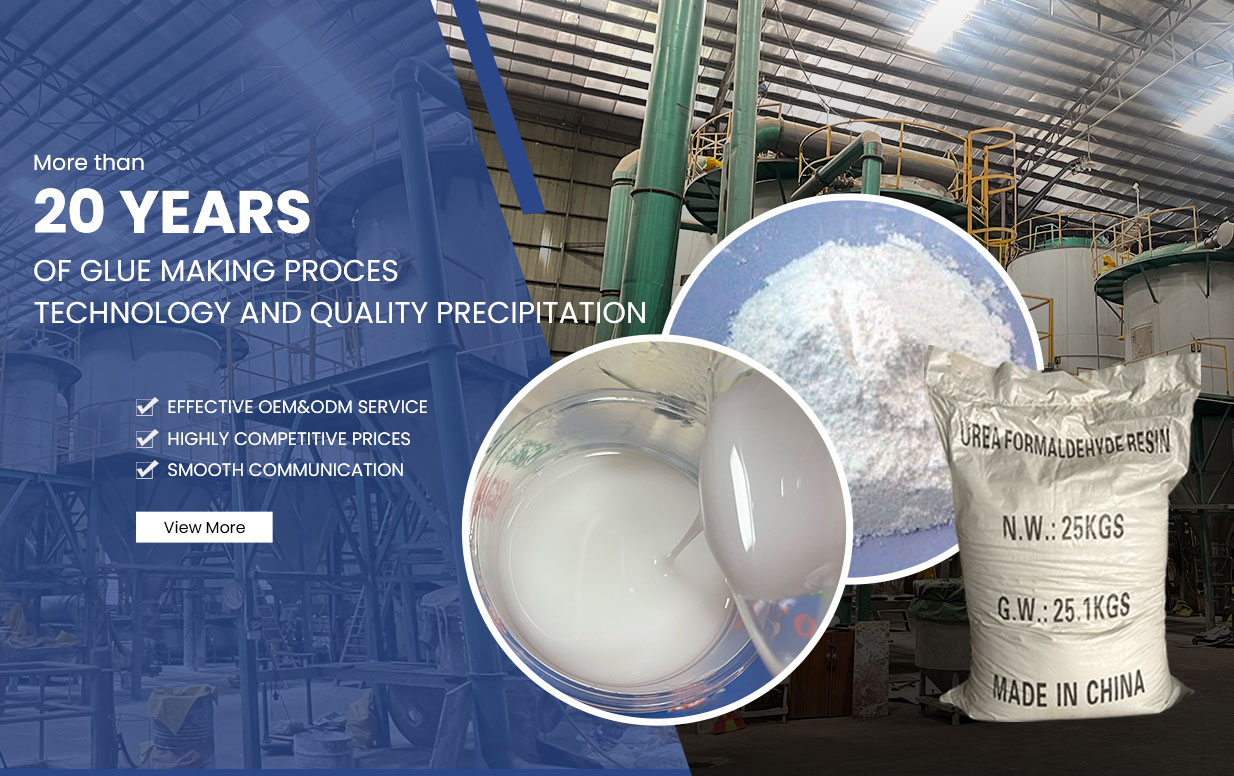
We supply UF and Muf resin powders for plywood and other wood-based panels. Send your plywood construction, veneer details, pressing conditions, and target performance level for a suitable formula recommendation, sample discussion, and bulk quotation.