jianguli@goodlyglue.com
+86-18948072250

formaldehyde scavenger is used in board production to help reduce residual formaldehyde emissions from wood-based panels. It is commonly considered when manufacturers need to improve indoor-air performance while maintaining stable bonding, pressing efficiency, surface quality, and the mechanical properties required for the finished board.
wood panels can contain formaldehyde from adhesive systems and other production materials. The final emission level is influenced by resin selection, formulation balance, wood moisture, hot-press conditions, board density, storage time, decorative finishing, and the environment in which the board is tested.
A Formaldehyde Scavenger is introduced as part of an overall emission-control approach. It is designed to react with or capture free formaldehyde within the panel system, helping manufacturers work toward lower-emission targets. However, it should not be treated as a simple add-on that can compensate for unsuitable resin selection or poor process control.
Manufacturers need to test the full panel system after the scavenger is added. Changes in formulation may affect curing behavior, bond strength, press cycle, or storage stability. The most useful solution balances lower emissions with reliable daily production.
Emission requirements may become more important when panels are used for interior furniture, cabinetry, shelving, wall panels, flooring substrates, and other enclosed indoor spaces. Products can also face different expectations depending on the target market, customer specifications, and downstream finishing process.
A formaldehyde scavenger for wood panels can be assessed for particleboard, MDF, plywood, and other composite materials. The best application method depends on the production process and the type of resin system being used.
| Evaluation point | Production question | Why it should be checked |
|---|---|---|
| Resin compatibility | Does the scavenger work with the current adhesive formulation? | Helps prevent changes in curing and bonding performance |
| Addition stage | When should it be mixed into the process? | Supports even distribution across the board |
| Press response | Does the press cycle remain stable? | Protects output and board consistency |
| Emission testing | Are panels tested after conditioning? | Confirms actual finished-board performance |
| Surface finishing | Will lamination or coating change the result? | Provides a more realistic evaluation of the end product |
An effective emission-control plan includes raw-material control, suitable adhesive technology, accurate weighing, consistent blending, and routine finished-board testing. Excessive or incorrectly added scavenger may create challenges such as uneven resin behavior, reduced bond performance, or unnecessary material cost.
Our technical team can help review the board type, current adhesive system, production parameters, and emission target before suggesting an application direction. Sample trials should use representative wood material and normal production conditions instead of only laboratory assumptions. Results from multiple runs provide a stronger basis for bulk adoption.
Composite wood factory buyers should prepare practical information before requesting support, including board density, thickness, wood species or fibre type, resin usage, press temperature, finishing method, and the target emission requirement. Clear data allows the formula and addition method to be assessed more accurately.
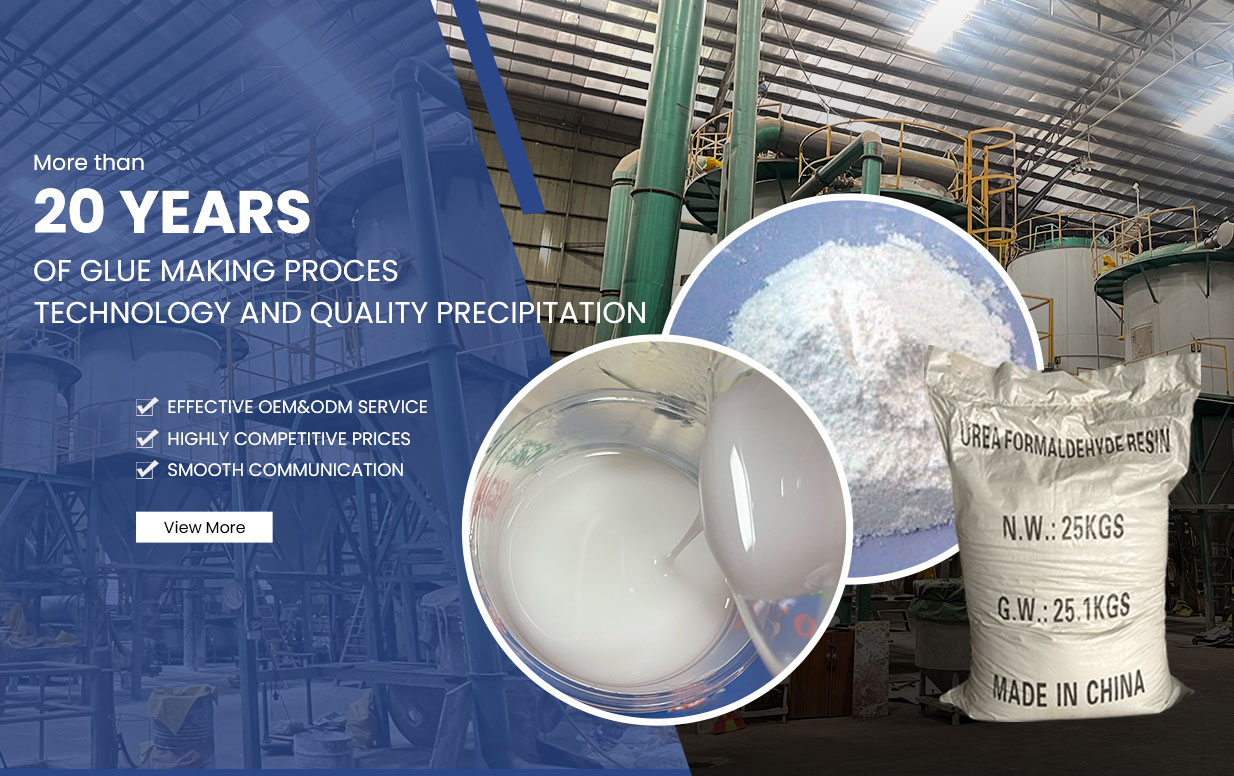
We provide Formaldehyde Decomposer solutions alongside powdered resin systems for wood-panel manufacturing. Share your panel type and current production conditions to discuss trial samples, technical support, and a quotation tailored to your emission-control objective.