jianguli@goodlyglue.com
+86-18948072250

Reliable adhesive production is never judged by one successful batch. A factory needs stable performance from batch to batch, especially when the glue is used for plywood, particleboard, laminated wood, bent wood parts, and furniture components. Small changes in resin reaction, moisture level, powder fineness, or curing behavior can affect pressing speed, bonding strength, board surface quality, and final rejection rate.
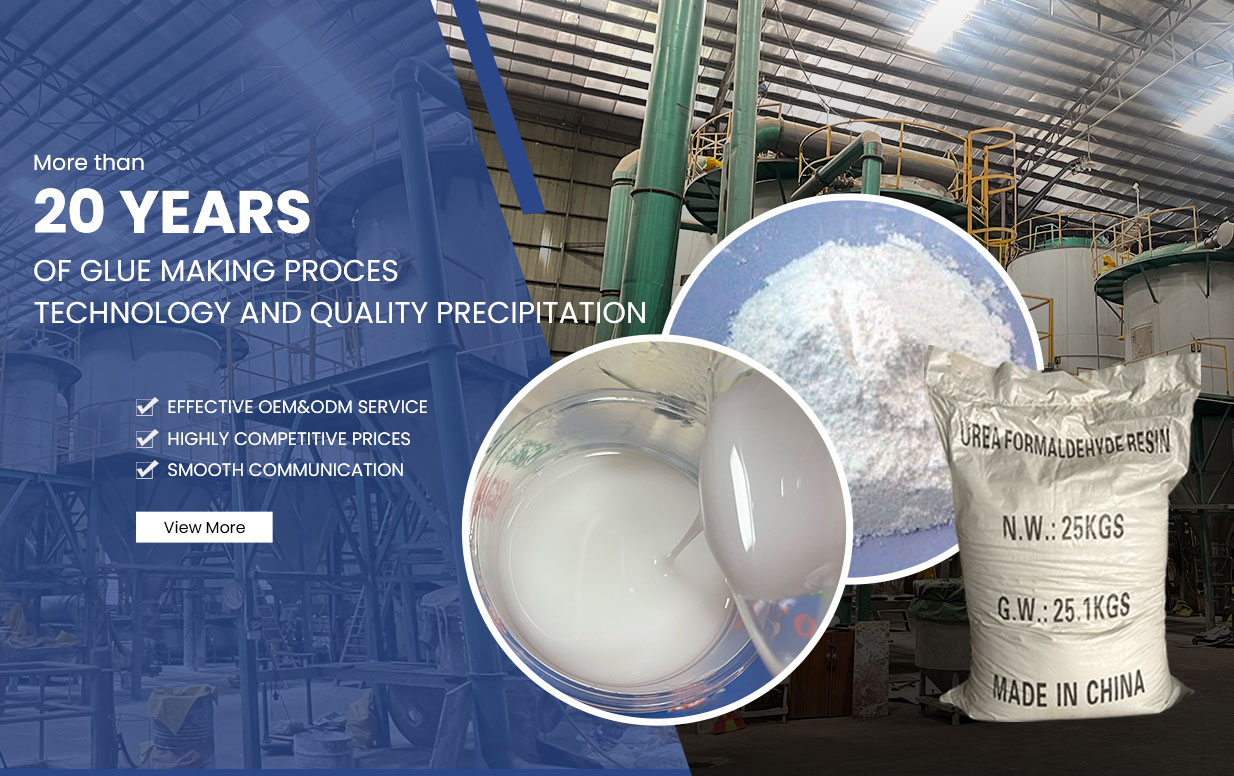
GOODLY focuses on uf resin adhesive powder for industrial wood applications, so batch stability is controlled from raw material selection to finished powder inspection. For manufacturers using powdered adhesive, consistent quality helps reduce trial mixing, avoid press adjustments, and keep bulk order production more predictable.
Batch consistency begins before resin production. Urea, formaldehyde-based resin intermediates, curing agents, fillers, and performance additives must be checked before they enter the production system. When the input materials vary too much, the final adhesive will also vary, even if the same production formula is used.
For UF resin systems, the molar ratio between formaldehyde and urea influences curing speed, viscosity change, free formaldehyde level, and storage behavior. Research published in E3S Web of Conferences reported that lower formaldehyde-to-urea ratios can reduce reactivity and free formaldehyde content, while resin aging may increase viscosity and gel time. This shows why raw material ratio control is directly connected with adhesive batch stability.
GOODLY manages adhesive production with attention to material compatibility, controlled formulation, and application needs. For factories using uf resin adhesive powder, this is important because the powder must not only look uniform, but also mix evenly, cure correctly, and deliver stable bonding after hot pressing.
Many adhesive problems happen because “qualified” is defined too loosely. A batch standard should not only include appearance and packaging weight. It should also define measurable indexes such as moisture content, fineness, solubility, pH after mixing, viscosity range, gel time, and bonding performance.
For industrial wood bonding, gel time is especially important. M. Dunky’s research on UF adhesive resins for wood described gel time as one of the most important resin parameters because it reflects curing reaction and practical application behavior. When gel time shifts too much, the production team may face short pot life, slow curing, weak bonding, or unnecessary changes to press temperature.
A practical batch control file should include:
Target viscosity after mixing
Acceptable gel time range
Powder moisture limit
Powder particle size requirement
Mixing ratio guidance
Storage condition requirement
Retained sample record
This approach turns adhesive batch consistency from a general quality promise into a measurable production system.
Final inspection is necessary, but it cannot replace process monitoring. During UF resin production, reaction temperature, pH curve, condensation time, concentration, and drying conditions all influence final powder performance. Once the resin reaction goes outside the control range, later correction becomes difficult.
GOODLY’s production logic focuses on process stability rather than relying only on after-production sorting. The goal is to keep each batch close to the approved technical profile. For users, this reduces the need to repeatedly adjust water ratio, coating amount, or hot press timing when changing from one batch to another.
A controlled process normally checks these production stages:
| Production Stage | Control Focus | Risk When Unstable |
|---|---|---|
| Raw material feeding | Ratio accuracy | Uneven curing behavior |
| Resin reaction | pH, temperature, time | Unstable viscosity or gel time |
| Concentration control | Solid content | Weak bonding or poor mixing |
| Powder drying | Moisture and heat exposure | Caking or performance loss |
| Sieving and blending | Particle uniformity | Glue lumps during preparation |
| Final packing | Sealing and batch code | Storage damage or traceability loss |
This is where quality control resin work becomes practical. The resin must be monitored as a chemical system, not treated as a simple powder commodity.
Powder adhesive quality must be proven in water, not only in the bag. If one batch disperses quickly and the next batch forms lumps, the production line may lose time before pressing even begins. Uneven dispersion can also create weak glue spots on veneer or particles.
The Korean Journal of Wood Science and Technology has reported that UF resin adhesives are widely used for plywood, particleboard, and medium-density fiberboard because they offer fast cure, water solubility, good panel performance, and cost efficiency. These advantages only become valuable when the adhesive is easy to prepare and behaves consistently in production.
GOODLY pays attention to powder handling, water mixing, and application suitability. For woodworking factories, a stable adhesive batch should allow operators to follow the same preparation method without constant correction. This supports smoother production during large-volume orders and helps reduce hidden labor cost.
Laboratory indexes are useful, but wood adhesive must also match real production conditions. Veneer moisture, wood species, spread rate, press temperature, press time, and board thickness all influence the final bonding result. A powder that passes simple appearance inspection may still perform poorly if its curing profile does not match the production line.
To maintain adhesive batch consistency, each batch should be tested against application-related indicators. For example, plywood producers may focus on dry bonding strength and veneer separation. Particleboard producers may care more about internal bond strength and resin distribution. Bent wood manufacturers may need a more stable bond under forming stress.
GOODLY’s uf resin powder is developed for woodworking applications where bonding reliability matters across repeated production cycles. Instead of only supplying a chemical material, GOODLY supports production-oriented adhesive selection for panel and furniture manufacturing needs.
Consistent quality also depends on traceability. Each adhesive batch should have a clear batch number, retained sample, inspection record, production date, and storage guidance. When a customer reports a mixing or bonding issue, traceability helps identify whether the cause is adhesive formulation, storage condition, water ratio, wood moisture, or pressing parameter.
This is especially important in the industrial quality control industry, where quality management is no longer limited to checking defects after they appear. Modern production control depends on prevention, data records, and fast problem tracking.
A retained sample system allows the manufacturer to compare customer feedback with the original batch profile. It also supports continuous improvement because repeated data can show whether a formula is drifting, whether drying conditions need adjustment, or whether packaging needs improvement for humid shipping routes.
Even a well-produced adhesive powder can lose stability if it is stored incorrectly. Moisture absorption may lead to caking, slower dispersion, or uneven mixing. Excessive heat may affect powder behavior. Damaged packaging may expose the adhesive to humidity during transport.
GOODLY’s powder format is designed to support convenient storage and shipping compared with liquid adhesive, but handling discipline is still necessary. Bags should be kept sealed, placed in a dry warehouse, protected from direct moisture, and used according to recommended storage time.
For bulk purchasing, this matters because adhesive quality must remain stable not only when it leaves the factory, but also when it reaches the user’s production site. Proper packaging, clear labeling, and storage instructions help reduce avoidable quality complaints.
Stable adhesive batches require more than a product quotation. Buyers should ask for technical parameters, suggested mixing ratio, application range, shelf-life guidance, and batch inspection items. A supplier that understands production needs can help reduce trial cost and improve order stability.
GOODLY’s advantage comes from focusing on industrial adhesive powder for wood processing applications. The company can support practical concerns such as curing speed, mixing convenience, bonding strength, and repeated batch supply. This is valuable for manufacturers that need stable production instead of one-time material testing.
Consistent adhesive quality is achieved through controlled raw materials, measurable batch standards, reaction monitoring, mixing tests, application checks, retained samples, and proper storage management. For uf resin powder, small process changes can influence viscosity, gel time, curing speed, and final bonding strength, so batch control must be built into every production step.
GOODLY provides UF resin adhesive powder for wood-based manufacturing where stable bonding performance and predictable use matter. Strong batch control helps factories reduce production uncertainty, keep pressing conditions consistent, and improve long-term procurement confidence.