jianguli@goodlyglue.com
+86-18948072250

Production efficiency in wood manufacturing is closely tied to how adhesives are selected, handled, and applied. From panel production to furniture assembly, adhesive behavior directly influences cycle time, defect rate, and overall output. In the manufacturing efficiency industry, optimizing adhesive use is often one of the fastest ways to reduce cost while improving consistency.
Rather than focusing only on machinery upgrades, many factories achieve measurable gains through better adhesive control, stable formulation, and process refinement. A structured approach to wood adhesive efficiency improvement can significantly enhance both productivity and product quality.
One of the most critical factors is matching adhesive curing speed with the production line. If the adhesive cures too slowly, press cycles become longer, reducing output. If it cures too quickly, it may lead to poor bonding or application difficulties.
A balanced curing profile allows manufacturers to maintain high-speed production without compromising bond strength. Adjusting formulation, solid content, and catalyst levels helps achieve this balance.
GOODLY supports customers by offering adhesive systems that match different production speeds, helping factories maintain consistent output while avoiding unnecessary delays.
Uneven adhesive application is a common source of inefficiency. Excess glue increases cost and drying time, while insufficient glue leads to bonding defects. Precise glue process optimization ensures uniform distribution across all materials.
Modern application systems such as spray nozzles, rollers, and automated spreaders can improve coating accuracy. However, adhesive viscosity must be properly controlled to match equipment requirements.
Factories that fine-tune application parameters often reduce glue consumption by 5% to 10% while maintaining or improving bonding performance.
Hot pressing is a major bottleneck in wood processing. Reducing press time can dramatically increase daily output, but only if the adhesive cures reliably within the shorter cycle.
To improve adhesive production efficiency, manufacturers should evaluate temperature, pressure, and adhesive formulation together. Optimizing these parameters allows faster curing while maintaining internal bond strength.
For example, adjusting pressing temperature within the optimal range can shorten curing time by several seconds per cycle, which accumulates into significant productivity gains over large production runs.
Moisture content in wood materials directly affects adhesive performance. High moisture levels can slow curing and cause internal defects, while low moisture may reduce adhesive penetration.
Maintaining a stable moisture range ensures consistent bonding and reduces variation in production results. Many factories control moisture between 6% and 12% depending on product type and environmental conditions.
GOODLY recommends aligning adhesive formulation with actual material conditions to improve stability and reduce rework rates.
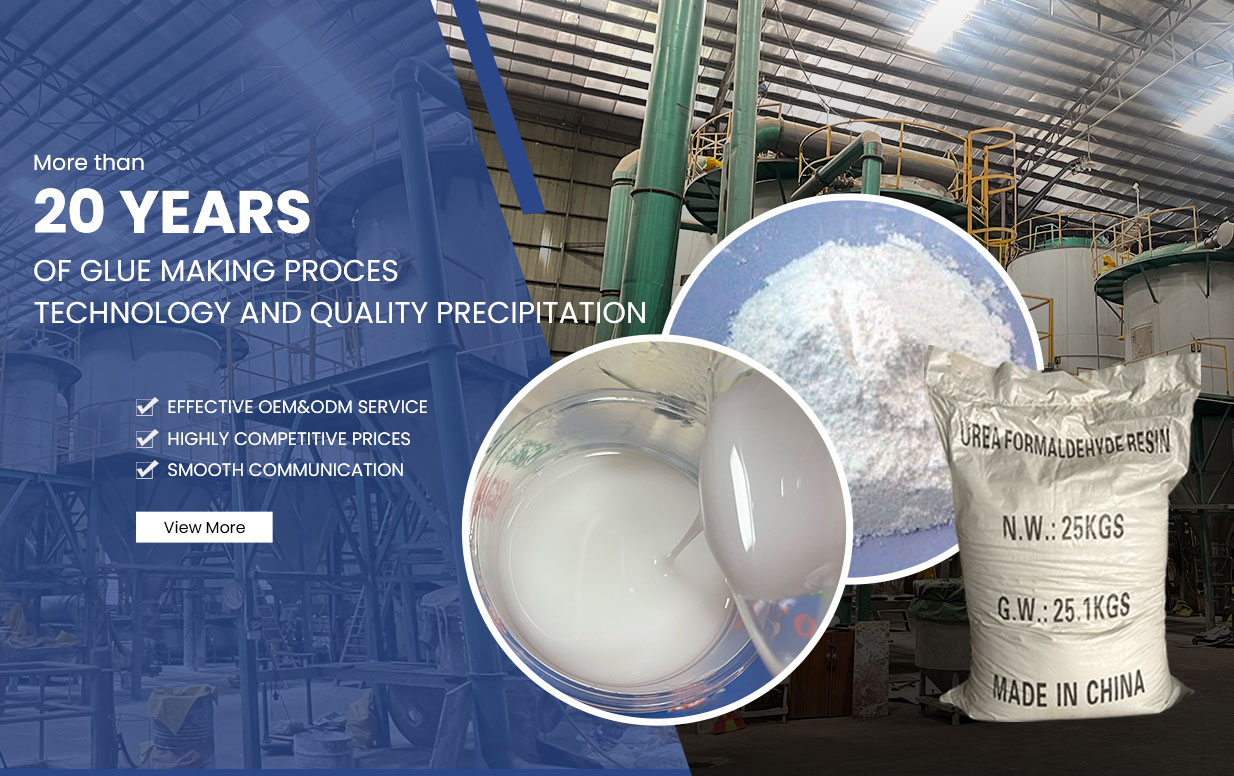
In certain production environments, powder-based adhesives such as wood uf resin powder provide additional flexibility. These systems allow manufacturers to adjust mixing ratios and prepare adhesive on demand.
Powder adhesives also offer advantages in storage stability and transportation, reducing the risk of material degradation. For factories with variable production schedules, this flexibility can help maintain efficiency across different orders.
GOODLY provides powder adhesive solutions designed for consistent mixing and reliable curing performance, supporting stable production operations.
Continuous monitoring of key performance indicators helps identify inefficiencies early. Metrics such as bonding strength, defect rate, adhesive consumption, and cycle time provide valuable insights into process performance.
Factories that use data-driven approaches can quickly adjust parameters and maintain stable output. In many cases, real-time monitoring reduces defect rates by more than 10% and improves overall production consistency.
Even with advanced equipment, operator skill plays a significant role in adhesive performance. Proper training ensures that workers understand mixing ratios, application techniques, and process control requirements.
Standardizing procedures reduces variability between shifts and improves repeatability. Clear guidelines for adhesive preparation and application help maintain consistent quality across all production batches.
A stable supply of high-quality adhesive is essential for efficient production. A reliable supplier provides not only consistent products but also technical support for process optimization.
GOODLY offers adhesive solutions tailored to wood processing applications, with a focus on stable performance, bulk supply capability, and practical technical guidance. This helps manufacturers maintain efficient operations and reduce production risks.
Improving production efficiency with wood adhesive requires a combination of proper material selection, process optimization, and consistent control. By aligning adhesive properties with production conditions, optimizing application methods, and maintaining stable material handling, manufacturers can significantly enhance output and reduce costs.
GOODLY supports these efforts by providing reliable adhesive systems and technical expertise, helping factories achieve stable, efficient, and high-quality production results.