jianguli@goodlyglue.com
+86-18948072250

Moisture exposure is one of the most common causes of bonding failure in wood products. When water penetrates the bondline, it can weaken adhesion, cause swelling, and eventually lead to structural damage. To address this, manufacturers rely on waterproof wood adhesive systems that are designed to maintain bonding integrity under humid or wet conditions.
In modern manufacturing, especially within the construction materials industry, the demand for moisture-resistant panels continues to grow. According to FAO data, wood-based panels are widely used in building and infrastructure applications, where exposure to humidity and environmental changes requires adhesives with higher durability and resistance performance.
A waterproof adhesive is not simply a glue that repels water. It is a system that forms a stable, cross-linked structure after curing, preventing water from breaking down the bond. This resistance comes from both chemical composition and curing behavior.
The USDA Wood Handbook explains that water resistance in adhesives depends on the ability of the cured resin to maintain its structure when exposed to moisture. Thermosetting resins such as phenol formaldehyde and modified urea formaldehyde create strong internal networks that are less affected by water compared to thermoplastic systems.
Phenol formaldehyde adhesives provide excellent water resistance and are widely used in exterior plywood and structural panels. Their dark color and higher curing requirements make them more suitable for industrial applications rather than decorative panels.
MUF adhesives improve water resistance compared to standard UF systems. They are commonly used for moisture-resistant boards where moderate waterproof performance is required.
Advanced formulations such as waterproof urea-formaldehyde glue offer improved performance while maintaining cost efficiency. By adjusting formulation and adding modifiers, these systems enhance resistance to moisture without significantly increasing production complexity.
Waterproof adhesives function through a combination of penetration, bonding, and chemical curing.
During application, the adhesive flows into the pores and fibers of the wood surface. Proper penetration ensures strong mechanical interlocking between adhesive and substrate.
When heat and pressure are applied, the adhesive undergoes a chemical reaction that forms a rigid, cross-linked structure. This network is resistant to water infiltration and maintains bonding strength even in humid conditions.
Once cured, the adhesive creates a barrier that limits water penetration. At the same time, the internal structure remains stable, preventing bondline degradation.
This is why a high-quality water resistant glue is essential for maintaining long-term performance in wood products exposed to varying environments.
In plywood manufacturing, adhesives must withstand both processing conditions and end-use environments. A reliable waterproof adhesive for plywood ensures that layers remain bonded even when exposed to moisture during storage, transportation, or installation.
GOODLY provides resin solutions designed to meet these requirements. Its adhesive systems are developed to balance bonding strength, curing efficiency, and moisture resistance, supporting stable production and durable end products.
The chemical composition determines the level of water resistance. Modified resins offer better durability compared to standard formulations.
Temperature, pressure, and pressing time must match the adhesive system. Incomplete curing reduces water resistance.
Excess moisture in veneers can interfere with bonding and reduce the effectiveness of the adhesive.
Uniform application ensures a continuous bondline, which is critical for preventing water penetration.
| Adhesive Type | Water Resistance | Cost Level | Typical Application |
|---|---|---|---|
| Urea formaldehyde | Moderate | Low | Interior panels |
| Modified UF | Improved | Medium | Moisture-resistant boards |
| Phenol formaldehyde | High | High | Exterior structural panels |
This comparison highlights that the choice of adhesive should align with product requirements and environmental exposure.
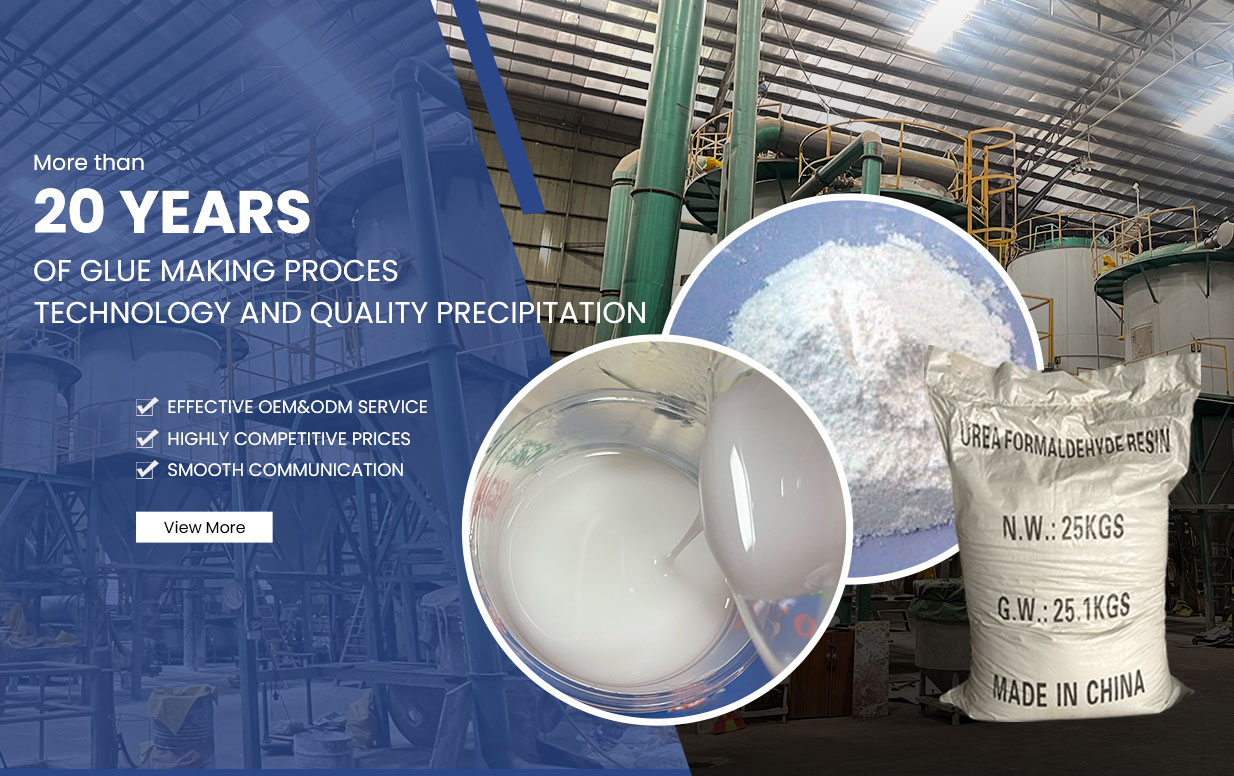
GOODLY focuses on developing adhesive systems that provide reliable moisture resistance while maintaining efficient production performance. With over 20 years of experience, the company offers customized formulations that adapt to different manufacturing conditions and product requirements.
Its resin solutions are designed for stable curing, controlled viscosity, and consistent bonding strength. These characteristics help manufacturers achieve durable performance without sacrificing production efficiency.
Waterproof wood adhesives play a critical role in ensuring the durability and reliability of wood-based products. Their effectiveness depends on both chemical formulation and production control.
By selecting the appropriate adhesive system and maintaining proper processing conditions, manufacturers can produce panels that resist moisture, maintain structural integrity, and perform reliably in demanding environments.