jianguli@goodlyglue.com
+86-18948072250

Strong plywood bonding starts long before hot pressing. It depends on how well resin chemistry, veneer preparation, moisture control, glue spread, pressing conditions, and final application requirements work together. In practical production, weak bonding is rarely caused by one issue alone. It is usually the result of several small deviations across the line. Research from USDA Forest Products Laboratory shows that wood moisture content, surface condition, adhesive spread rate, assembly time, pressure, and curing conditions all directly affect bond formation and long-term durability.
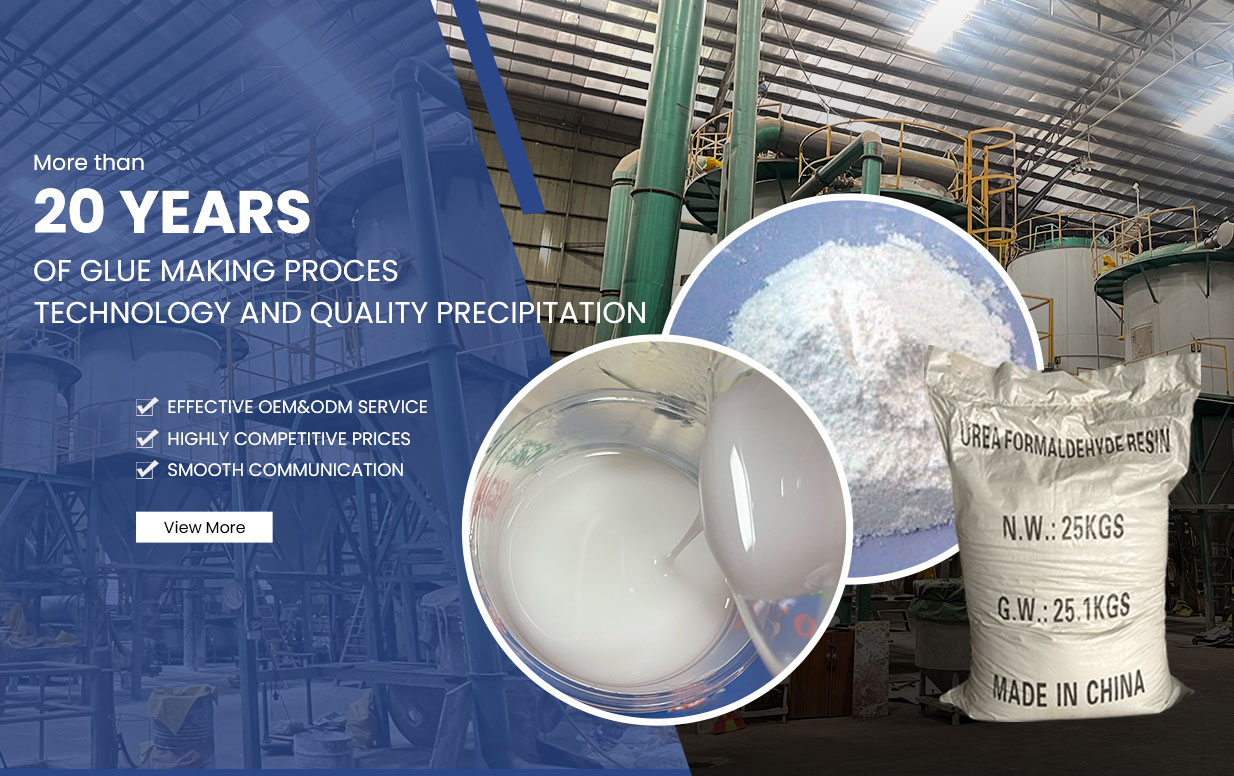
For plywood manufacturers, the target is not only high dry strength. The bond must also stay stable when panels face humidity changes, heat, storage variation, transport pressure, and machining after production. GOODLY focuses on this manufacturing logic by supplying UF and Muf resin powders for plywood, veneer bonding, flooring, formwork, and related wood applications, while also offering customized formulations for different process needs and more than 20 years of production experience.
The first step to stronger plywood is matching the adhesive to the board grade and service condition. UF resin remains widely used because it offers cost efficiency, fast curing, and strong dry bonding performance. A BioResources study notes that UF adhesives account for about 90 percent of total wood adhesive use in wood based panel manufacturing. That scale reflects how effective UF remains for interior plywood when the process is well controlled.
When better moisture resistance is needed, a melamine modified resin becomes the more reliable choice. USDA research found that melamine addition improved cure speed and bond strength. GOODLY also states that adding melamine improves water resistance, durability, and bond strength, which is why MUF products are better suited to flooring, construction panels, and other demanding environments. This is the core of any real UF vs muf resin decision in plywood production.
Moisture control is one of the biggest hidden drivers of bonding strength. USDA guidance shows that adhesives generally perform best when wood is between 6 percent and 14 percent moisture content, but for veneer hot pressing, 3 percent to 5 percent veneer moisture is satisfactory for hardwood plywood and softwood plywood uses. The same guidance warns that excess moisture can create steam pressure, internal voids, poor cross linking, and weaker bonds.
This means plywood plants should not treat veneer moisture as a simple drying target. Veneer should be uniform across sheets, close to the expected service condition, and checked continuously rather than only batch sampled. If adjacent veneers vary too much, internal stress rises after bonding and the finished panel becomes more vulnerable to delamination or surface instability. Good bonding strength is therefore closely linked to moisture consistency, not just average moisture level.
Bonding strength is limited when resin cannot wet and penetrate the wood surface properly. USDA guidance notes that surfaces should be prepared to remove contaminants and ideally be processed shortly before adhesive application. Fresh and uniform surfaces help the resin form a thin, continuous bond line instead of patchy areas with glue starvation or overpenetration.
Glue spread also matters as much as glue type. APA manufacturing guidance for engineered wood qualification includes adhesive spread rate, assembly time, pressure, and wood surface temperature among the key variables that must be controlled. In simple terms, too little adhesive reduces effective bond area, while too much can slow curing, increase moisture load, and weaken the structure of the bond line. A strong plywood line is one where spread rate is stable enough to give full coverage without waste.
Even with a suitable resin, the bond will drop if the layup waits too long before pressing or if hot press conditions drift. Research on UF bonded plywood found that wet shear strength and formaldehyde emission are strongly affected by assembly time and the hot press process. That means resin selection alone cannot solve bonding problems when production rhythm is inconsistent.
Plants that want better bonding strength should review four control points together: veneer moisture, glue spread rate, open assembly time, and press temperature profile. GOODLY supports this process driven approach because its resin powders are supplied for specific plywood and woodworking applications rather than as one universal product. That helps manufacturers fine tune curing speed, bonding behavior, and production stability according to panel structure and climate conditions.
Bond strength and environmental compliance are now part of the same production decision. The US EPA requires hardwood plywood, MDF, and particleboard sold or imported into the United States to be TSCA Title VI compliant, with third party certification, labeling, and emission control requirements. For plywood exporters, resin formulation and curing quality affect not only performance but also market access.
This is where a serious UF vs MUF performance comparison becomes important. UF can be highly effective for interior panels with strong process control and compliant formulation. MUF gives a wider safety margin where moisture resistance and durability matter more. GOODLY states that its MUF products are designed to minimize formaldehyde emissions in line with environmental standards, while its broader resin portfolio covers plywood, decorative veneer, flooring, and construction uses.
A stronger plywood bonding program usually comes from disciplined process adjustment rather than one dramatic change. The table below summarizes the most important control points.
| Production factor | Why it affects bonding strength | Practical improvement direction |
|---|---|---|
| Veneer moisture | Excess moisture reduces cure quality and can create steam defects | Keep veneer moisture stable and suited to hot pressing targets |
| Surface condition | Dust, aging, and contamination reduce resin wetting and penetration | Use clean, freshly prepared veneer surfaces |
| Resin selection | Different applications need different water resistance and cure behavior | Match UF or MUF to panel grade and service condition |
| Glue spread rate | Low coverage creates weak zones, high spread adds moisture and cost | Calibrate equipment for even and repeatable coverage |
| Assembly time | Delays before pressing reduce bond consistency | Keep layup rhythm stable across shifts |
| Press conditions | Temperature, pressure, and time drive final cure and bond formation | Verify press profile against panel structure and resin system |
| Compliance target | Emission rules influence resin choice and curing window | Align formulation with export market requirements |
The value of this approach is rising as the wood products market expands again. FAO reported that global exports of wood and paper products reached 486 billion dollars in 2024, with wood based panel production increasing by 4 percent to 5 percent. In a larger and more competitive market, stronger bonding is not only a quality issue. It is a supply reliability issue across the industrial resin manufacturing industry.
GOODLY’s advantage is not limited to selling adhesive powder. The company presents itself as a specialized resin producer with more than 20 years of glue making experience, customized product capability, ongoing technology upgrades, and product lines covering plywood UF resin, veneer glue powder, MUF flooring resin, waterproof construction glue, and related solutions. For plywood manufacturers, that matters because bond strength improvement often depends on getting a resin adjusted to the line, the board structure, and the target market, rather than buying a generic formula.
Better bonding strength in plywood production comes from disciplined process control and the right resin strategy. When veneer moisture stays stable, surfaces stay clean, glue spread stays uniform, press conditions stay consistent, and resin chemistry matches end use, the result is stronger panels, lower delamination risk, and more dependable output. GOODLY’s UF and muf resin systems give manufacturers a practical path to improve bond performance while supporting durability, process stability, and compliance in demanding markets.