
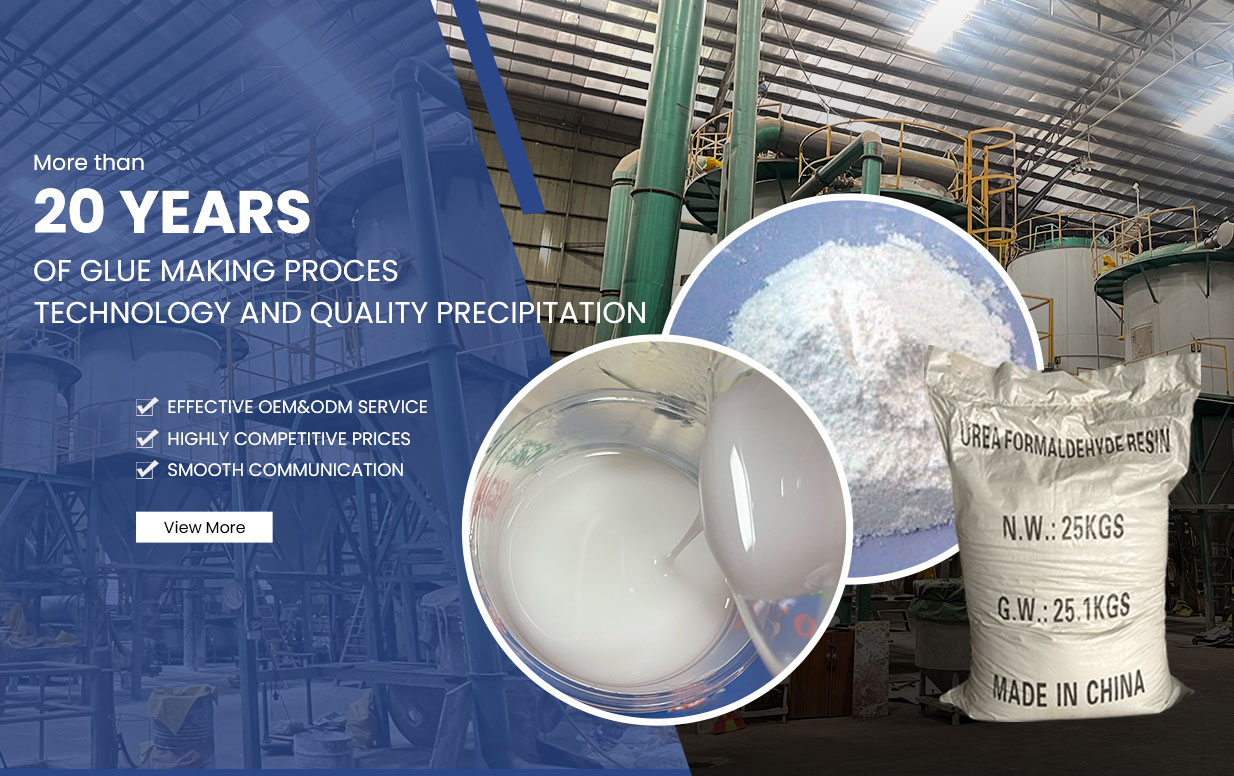
Mixing urea-formaldehyde resin powder demands precision and adherence to proper procedures. If you’re working with this adhesive system, following each step carefully ensures consistent bonding performance and minimal defects.
Urea formaldehyde resin powder is widely used in the production of adhesives, plywood, particle boards, and molding compounds. As a thermosetting polymer with reactive properties, it is sensitive to moisture and temperature. Proper storage is essential to maintain its shelf life, prevent premature curing, and ensure consistent product quality.
In plywood manufacturing, the correct application of urea-formaldehyde (UF) adhesives plays a pivotal role in ensuring strong bonds, dimensional stability, and overall quality of the finished panels. This article outlines the best practices for applying UF glue in plywood production—from preparation to curing—and also includes a brief recommendation of a reputable supplier for UF resin powders.
A formaldehyde decomposer is a chemical product or additive designed to neutralize or break down the volatile organic compound Formaldehyde (CH₂O) by converting it into less harmful substances. According to the manufacturer GOODLY, their “Formaldehyde Decomposer” works by introducing a catalyst that accelerates the conversion of formaldehyde into harmless end-products.
When working with resin powders—especially thermosetting or thermoplastic grades used in adhesives, coatings, and molding applications—understanding how long the material remains viable is crucial for quality, performance, and safety. Here’s a comprehensive guide on how long resin powders last, what affects their shelf life, how to recognise degradation, and how to store them properly.
Particleboard manufacturing depends heavily on the type of resin used to bond wood particles into a stable, strong, and durable sheet. Selecting the correct resin determines not only the mechanical strength and water resistance of the board but also its cost efficiency and environmental performance.
Adhesive powder plays a critical role in modern manufacturing, especially in industries such as textiles, footwear, automotive interiors, and electronics. Its performance largely depends on how well it bonds to the chosen substrate. Testing the bonding strength is therefore an essential step in ensuring reliability, durability, and product quality.
Resin powders are essential raw materials used in adhesive, coating, and molding industries. Proper storage ensures that these materials maintain their chemical stability, flowability, and adhesive strength over time. Incorrect handling or exposure to moisture can cause clumping, oxidation, and a reduction in performance.
Melamine urea formaldehyde (MUF) resin is a thermosetting adhesive and binder widely used in the wood products, laminates, paper impregnation, and flooring industries. By combining melamine, urea, and formaldehyde in controlled proportions, MUF offers a balance of performance, cost, and durability.
Urea-formaldehyde (UF) resin powders are widely used in wood products, laminates, particleboard, plywood, flooring, and other engineered wood applications. Choosing a high-quality UF resin powder is essential for ensuring bonding strength, stability, formaldehyde emission control, curing performance, and long-term durability.