jianguli@goodlyglue.com
+86-18948072250

Powdered urea-formaldehyde resin adhesives are widely used in manufacturing, offering high bond strength, cost-efficiency and suitability for bonding wood composites and similar substrates. When properly applied, these adhesives deliver reliable performance and durable assemblies. Below is a comprehensive guide to using these powdered adhesives effectively in a manufacturing environment.
Powdered urea-formaldehyde (UF) resin adhesives are pre-formulated powders that contain resin, catalyst and fillers. They are especially suited for applications where a solid thermoset bond is required, such as bonding plywood, particle board, MDF, laminates and veneers. Because they are in powder form they offer longer shelf storage, simplified transport and convenient activation by water mixing. Major benefits include:
High bond strength and rigidity once cured.
Good heat resistance and acceptable water-resistance for interior use.
Lower cost compared with some other adhesive systems.
Correct storage and handling are essential for maintaining adhesive performance and ensuring safe manufacturing processes.
Storage conditions:
Keep the powder adhesive in a cool, dry environment, sealed in its original container to avoid moisture pickup or premature catalysis.
Avoid storage at high ambient temperature or high humidity — both can shorten shelf life and negatively affect mixability and bonding.
Manufacturers typically state a shelf life of around one year for unopened containers under proper conditions; once moisture or high temperature exposure occurs, usable life may drop significantly.
Handling safety tips:
Use appropriate personal protective equipment (PPE) such as gloves, eye protection, and dust masks when dealing with powders.
Ensure adequate ventilation in mixing and application zones because powders can become airborne and dust may pose inhalation risk.
Clean mixing vessels, applicators and bonding stations regularly to avoid contamination from previous batches or foreign materials.
The key to optimal bonding is proper mix preparation and monitoring of pot life and open/assembly times.
Mixing proportions:
Typical mixing involves combining the dry powder with water. One guideline suggests using 50-65% water by weight of the dry powder.
A typical protocol: add about two-thirds of the required water to the mixing vessel, slowly add the resin powder while stirring at low speed (<2 000 rpm) until smooth and lump-free (3-5 minutes), then add the remaining one-third water and stir for an additional minute.
If the resulting mixture appears sandy or grainy, it may indicate the powder has deteriorated or moisture uptake has occurred; it should then be discarded.
Pot life and usable window:
After mixing, the adhesive gradually advances toward cure. This usable window (pot life) is temperature-dependent: at ~70 °F pot life might be ~5.5 hours; at ~90 °F it may shrink to ~3 hours.
Do not mix more material than can be applied reliably within the pot life. If the mix thickens and spreads poorly, performance may suffer.
If necessary, adding up to ~3% additional water to a mix that begins thickening may extend usage slightly, although careful monitoring is required.
Proper surface preparation ensures maximum bond strength and minimal failure risk.
Substrate moisture content and condition:
Wood composites or solid wood should be at the appropriate equilibrium moisture content: ~8-10% (max 12%) for cold pressing, ~6-8% (max 10%) for hot pressing.
Surfaces should be freshly machined (ideally within 12 hours) and free from dust, oil, grease or other contaminants.
Surface roughness and cleanliness:
Very smooth surfaces may reduce adhesive wetting and bonding. Slight roughening or sanding may improve adhesion.
Ensure the surfaces are dry and free of oils, waxes or other barrier films.
The actual bonding process involves application of the adhesive, time for assembly, pressure/temperature curing and post-press handling.
Adhesive spread rate:
Spread rate depends on substrate, curing method and the required bond strength. Typical values: 25 lb to 50 lb per 1,000 square feet MSGL (thousand square feet of glue line) in industrial veneer/board work.
For RF curing, lower spread rates (e.g., 32-36 lb/1,000 sq ft) may be used to avoid interference with the equipment.
Assembly times (open time & closed time):
Open assembly time: interval after glue spread before mating surfaces are joined.
Closed assembly time: interval after mating surfaces are joined before applying full press/clamp. These times shrink with rising temperature, thicker glue films and more porous substrates.
Example guideline: at 70 °F maximum combined assembly time might be ~40 minutes; at 90 °F it may reduce to ~20 minutes. Pressing/curing:
Pressure must bring surfaces into intimate contact for the required curing duration. For solid wood glue-ups: 150 psi might suffice for low density species, up to 250 psi for high density.
Cold pressing at ~70 °F: 4 hours for low density boards, up to 6 hours for higher density; at ~90 °F the times drop to ~2-4 hours. Hot pressing: 100-200 psi at ~250 °F, for 1-3.5 minutes depending on glue line depth.
After pressing, dead-stack the panels (with top weight) for 18-48 hours prior to machining or sanding depending on hot/cold press application.
Maintaining consistent production quality involves controlling spread, monitoring bond strength, cleaning equipment and addressing common defects.
Quality control measures:
Periodically inspect cured glue joints for voids, delamination or bond failures. Substrate changes, moisture content or mix errors may reveal issues.
Equipment such as mixers, applicators and presses should be cleaned regularly to avoid contamination and ensure repeatable spread rates.
Clean-up practices:
Since most powdered uf resin adhesives are water-based after mixing, warm water is ideal for cleaning mixing vessels and applicators.
Collect unused mixed adhesive before it cures into a solid plug; disposed cured adhesive should be handled according to local waste regulations.
Cured adhesive on bonded pieces is best removed by sanding or machining; these adhesives are generally easier to sand than many alternatives.
Proper diagnosis and correction help maintain production efficiency and bond performance.
| Problem | Possible Cause | Remedy |
|---|---|---|
| Adhesive appears sandy or will not dissolve | Powder has absorbed moisture / expired shelf life | Discard and replace powder; ensure proper storage |
| Poor bonding strength or delamination | Insufficient adhesive spread, inadequate pressure, or moisture escape from glue-line before cure | Check spread rate, ensure sufficient pressure & cure time, verify substrate moisture content |
| Glue line thick or brittle | Excessive spread, thick film, insufficient pressure | Reduce spread rate, ensure tight mating surfaces, increase pressure |
| Short pot life or mix thickening quickly | High ambient temperature, large batch mixed beyond usable window | Mix smaller batches, control ambient temperature |
| Excessive bleed-through on veneer work | High spread, high porosity substrate, excessive open time | Lower spread rate, adjust open time, test for bleed-through before full run |
Manufacturing contexts in which powdered UF resin adhesives excel include:
Laminating decorative veneers to wood panels or composites.
Bonding solid wood components in furniture manufacturing.
Hot pressing bent lamination or molded wood parts.
Bonding engineered wood composites such as MDF or particle board for interior applications.
Best practice tips:
Match adhesive grade to the pressing method (cold press, hot press, RF).
Maintain consistent substrate moisture and clean surfaces for best performance.
Monitor and record spread rate, mix ratios, pot life and cure times to ensure repeatable results.
Ensure operators are trained in mix procedures, safety practices and equipment calibration.
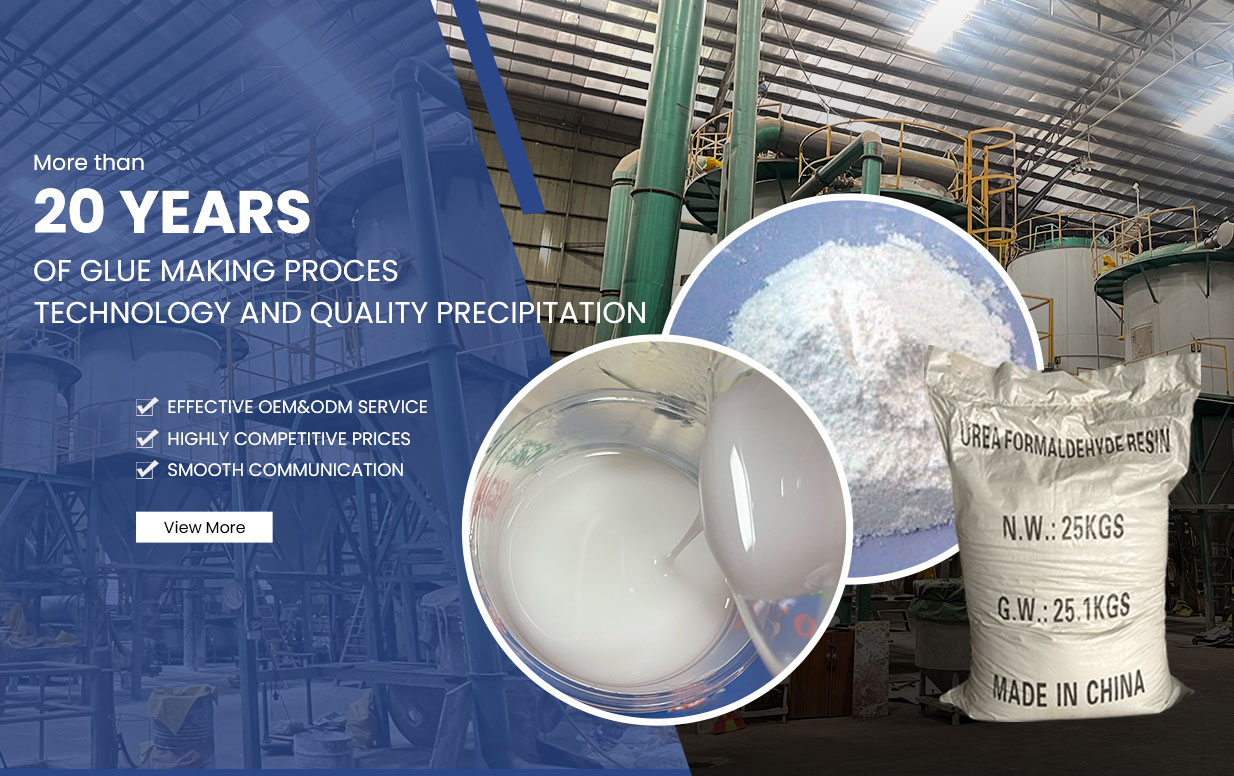
Selecting a supplier with experience in powdered urea-formaldehyde resin adhesives is key. For instance, the company GOODLY offers a range of uf resin powders designed for plywood, particleboard and density board applications, and emphasises over 20 years of experience in resin powder production. Their commitment to customization and quality makes them a worthy partner in manufacturing adhesive supply.
Powdered urea resin adhesives offer a powerful bonding solution for many manufacturing applications, provided proper storage, mixing, surface preparation, application and cure control are observed. By adhering to the guidelines above, manufacturers can achieve strong, durable bonds and high production efficiency. Partnering with an experienced supplier like GOODLY can further enhance reliability and technical support in your adhesive operations.