jianguli@goodlyglue.com
+86-18948072250

When purchasing adhesive materials for industrial production, many buyers compare liquid glue and powdered glue before making a final decision. The reason is not only related to adhesive performance but also involves storage, transportation, production flexibility, and long-term supply management. Different adhesive forms create different requirements during handling and application, so understanding their practical differences helps manufacturers select a solution that fits their production environment.
Adhesive purchasing decisions affect more than the material itself. The selected adhesive form can influence how products are stored, how production teams prepare materials, and how smoothly the manufacturing process operates.
Liquid glue is commonly associated with ready-to-use convenience, while powdered glue provides flexibility in storage and preparation. Because factories have different equipment conditions and production models, there is no single adhesive format that fits every situation.
For adhesive wholesale purchase buyers, comparing these two options helps identify which characteristics are more valuable for their specific supply requirements.
The difference between powdered glue and liquid glue is mainly reflected in material handling, preparation methods, and production management.
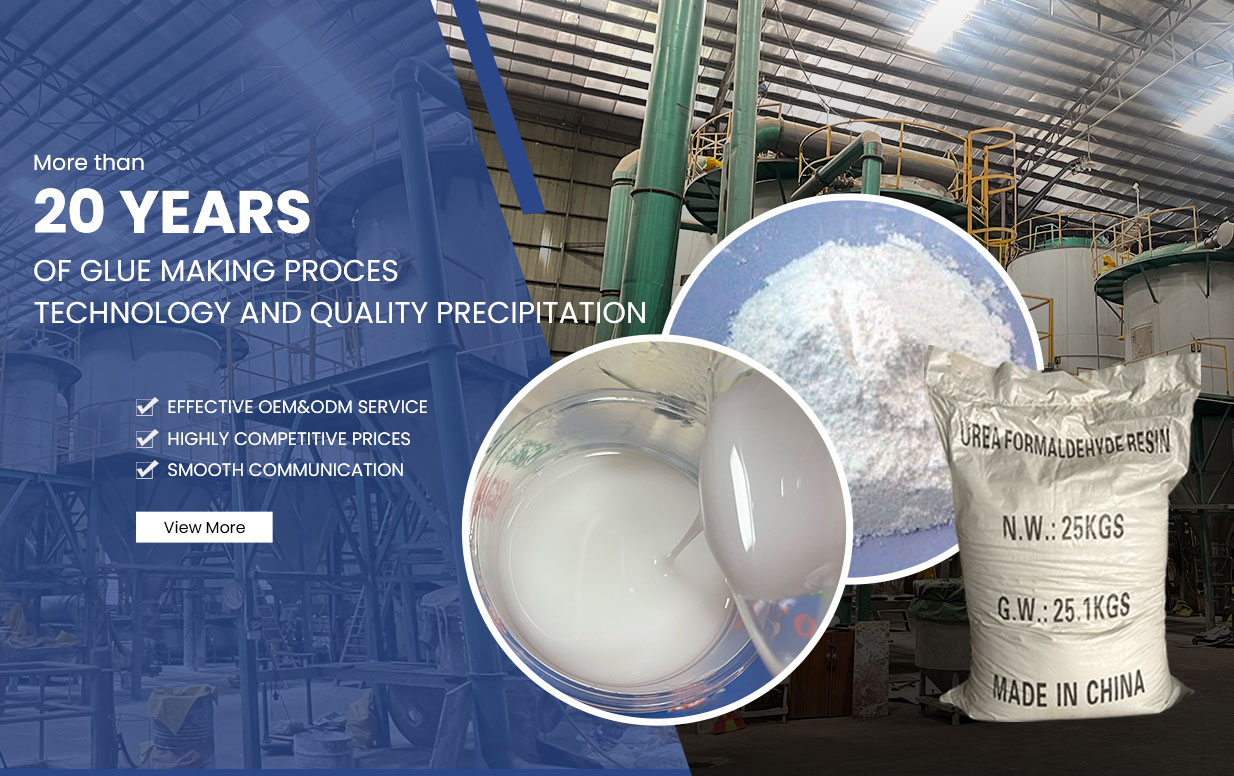
Wood Adhesive Resin Powder is supplied in a dry form and normally requires preparation before application. This allows manufacturers to store the material in a stable condition and prepare it according to production needs.
Liquid glue is supplied in a ready-made form, which may simplify immediate application but usually requires more attention to storage conditions and usage schedules.
The practical differences can be summarized as follows:
| Consideration | Powdered Glue | Liquid Glue |
|---|---|---|
| Storage flexibility | Suitable for dry storage and inventory planning | Requires attention to storage environment |
| Transportation | Easier handling for long-distance supply | May require additional transportation considerations |
| Production preparation | Requires mixing before use | Usually ready after basic preparation |
| Inventory control | Allows flexible storage periods | Often requires closer usage planning |
For factories managing regular production schedules, material storage is an important part of supply planning.
Powdered glue allows manufacturers to keep adhesive materials in a dry state and prepare them according to actual production demand. This can provide more flexibility when production volumes change or when materials need to be transported over long distances.
In addition, dry adhesive materials can help manufacturers organize inventory more efficiently because storage planning is separated from final adhesive preparation.
However, the effectiveness of powdered glue still depends on proper preparation methods and suitable production conditions.
The right adhesive choice depends on the relationship between material characteristics and manufacturing requirements.
Storage capacity is one factor to consider. Factories with suitable preparation areas may find powdered adhesive easier to manage, while operations requiring immediate application may have different priorities.
Production equipment is another consideration. The selected adhesive should match existing mixing, application, and processing systems to avoid unnecessary changes.
Supply planning also matters. Buyers who purchase adhesive in larger quantities need to consider transportation efficiency, storage stability, and consistency between different batches.
The form of adhesive affects how production teams organize daily operations.
With powdered adhesive, manufacturers need to manage preparation procedures carefully to achieve consistent mixing and application results. This process provides flexibility but requires proper control.
With liquid adhesive, manufacturers may focus more on storage management and usage timing to maintain stable performance.
The important factor is not simply choosing one form over another but ensuring that the adhesive system matches the factory’s operational method.
A suitable adhesive decision should consider the complete supply chain rather than only the purchase price.
For large-volume purchasing, buyers usually need to evaluate material stability, transportation requirements, production compatibility, and supplier support.
Comparing powdered glue and liquid glue helps manufacturers understand which format provides better efficiency within their own production environment.
Comparing liquid glue and powdered glue allows buyers to understand how different adhesive forms influence production, storage, and supply management.
Wood Adhesive Resin Powder can provide flexibility in storage and preparation, while liquid glue may offer convenience in direct application. The final decision should be based on manufacturing requirements, operational conditions, and long-term supply planning.
A careful comparison before purchase helps manufacturers choose an adhesive solution that supports stable production and efficient material management.