jianguli@goodlyglue.com
+86-18948072250

A noticeable odor after hot pressing does not always mean the panel has one single chemical problem. Heat can release moisture, wood extractives, resin-related volatile compounds, and substances from waxes or other additives. Freshly pressed boards may therefore smell stronger than conditioned boards. Persistent or unusually sharp odor, however, should trigger a review of the resin system, pressing cycle, raw materials, and post-press storage.
Hot panels release volatile substances more rapidly because their internal temperature remains high. Odor may decrease as the boards cool and receive adequate ventilation. When the smell remains strong after conditioning, appears unevenly between batches, or becomes more noticeable in enclosed packaging, production records should be investigated.
Odor alone cannot identify formaldehyde concentration. Human perception varies, and other volatile organic compounds may contribute to the smell. Instrumental emission testing is therefore necessary when the product must meet a defined environmental or market requirement.
| Possible Source | Production Clue | Recommended Review |
|---|---|---|
| Resin dosage too high | Strong odor with heavy glue consumption | Check spread rate and calibration |
| Incomplete curing | Soft bond or unstable strength | Review press temperature and time |
| High furnish moisture | Steam and delayed curing | Measure surface and core moisture |
| Contaminated wood material | Odor limited to certain raw batches | Trace wood and recycled content |
| Wax or additive variation | Odor changes after formulation adjustment | Compare chemical batch records |
| Poor cooling and ventilation | Odor increases in stacked panels | Improve post-press conditioning |
Recycled wood requires particular attention because coatings, plastics, oils, or unknown residues may enter the furnish. Incoming inspection and supplier control can prevent contaminated raw material from becoming a finished-panel complaint.
A panel that is under-cured may retain more reactive material and continue releasing volatile compounds after pressing. Low platen temperature, short pressing time, excessive mat moisture, or poor heat transfer through a thick panel can all contribute.
Overheating is not a reliable solution. Excessive temperature may discolor the board, damage wood components, or increase the release of some volatile substances. The correct cycle should achieve complete bonding while remaining within the validated operating range for the resin and board structure.
A Formaldehyde Scavenger can react with part of the free formaldehyde in a UF-based adhesive system. Used at a verified dosage, it may support emission control and help address resin-related odor. It should not be used to hide contaminated furnish, incorrect pressing, or poor warehouse ventilation.
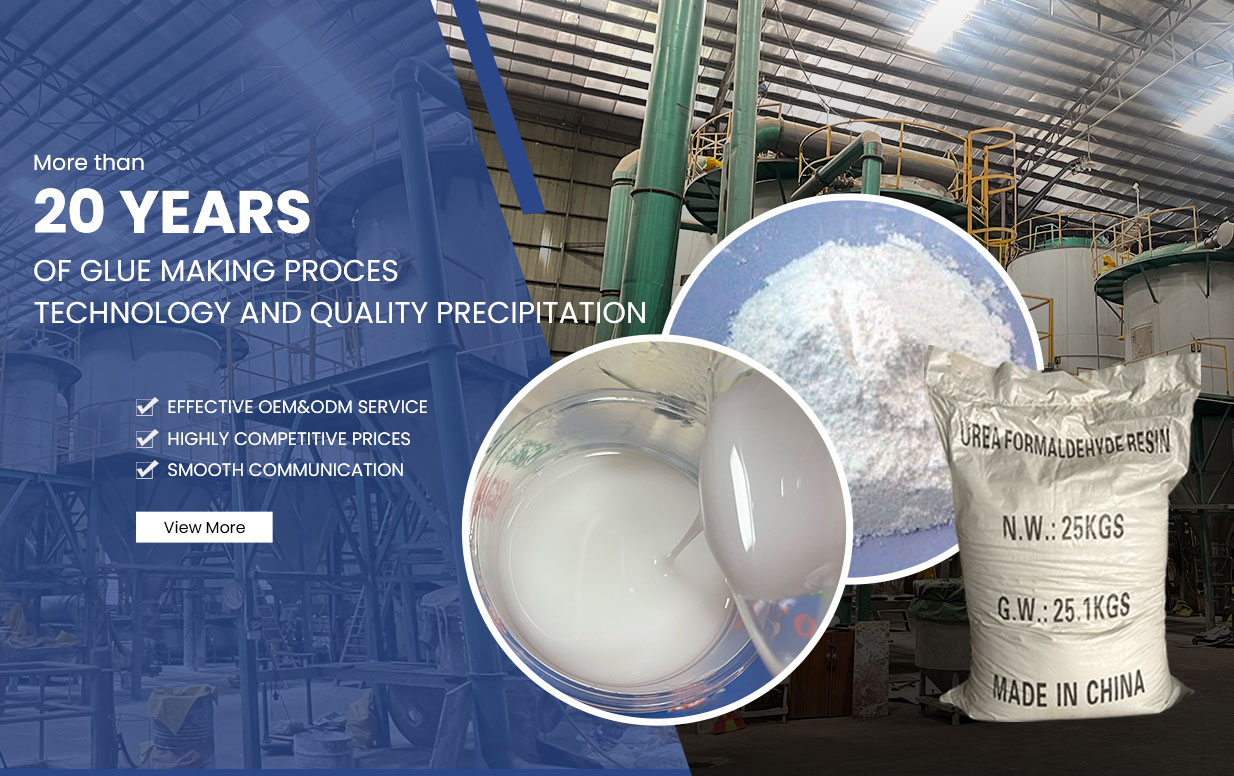
GOODLY supplies a powdered Formaldehyde Decomposer intended for incorporation into urea-formaldehyde resin glue. Before using it as a reduce board odor additive, the factory should confirm compatibility, mixing method, dosage, curing behavior, and final board performance through controlled trials.
Adding a scavenger can influence adhesive viscosity, pH, gel time, pot life, and curing speed. Trial panels should therefore be tested for internal bond strength, dimensional stability, surface quality, and formaldehyde emission. The preferred formulation is the one that reduces emissions without creating delamination or slower production.
Furniture panel factory buyers should define acceptable odor and emission requirements separately. Sensory inspection can support routine monitoring, while standardized testing provides measurable evidence for procurement and compliance decisions.
Board odor is best managed by tracing its origin rather than assuming every smell comes from the same source. Stable raw materials, correct resin application, complete curing, controlled additive use, sufficient cooling, and suitable ventilation work together to produce panels with more consistent indoor-use performance.