jianguli@goodlyglue.com
+86-18948072250

Curved wooden parts place unusual stress on an adhesive joint. Thin veneers or solid wood strips are bent around a mold and held under pressure while the glue cures. After demolding, the laminated structure naturally tries to return toward its original shape. A suitable uf resin powder must therefore provide a rigid, consistent bond that limits layer movement and helps the component retain its designed curve.
Straight panels mainly require uniform contact across a flat surface. Bent components must maintain contact while the layers are under tension and compression. The outer layers stretch around the mold, while the inner layers are compressed. Weak glue lines may slip during pressing or separate after the part is removed.
The severity of the curve also matters. A tight radius creates more stress than a gentle bend, while thicker laminations are usually harder to form. Manufacturers often use several thin layers because they follow the mold more easily and allow adhesive to be distributed between each layer.
| Production Factor | Possible Bonding Risk |
|---|---|
| Tight bending radius | High spring-back and glue-line stress |
| Thick wood layers | Poor contact with the mold |
| Uneven adhesive spread | Local separation between laminations |
| Excessive assembly time | Dry glue areas before pressing |
| Low curing temperature | Weak bond at demolding |
| Early mold removal | Movement before full strength develops |
A glue powder for curved wood should mix smoothly, provide enough assembly time for arranging multiple layers, and cure within the available heating process. The usable period must be long enough for coating and mold loading but controlled enough to support production speed.
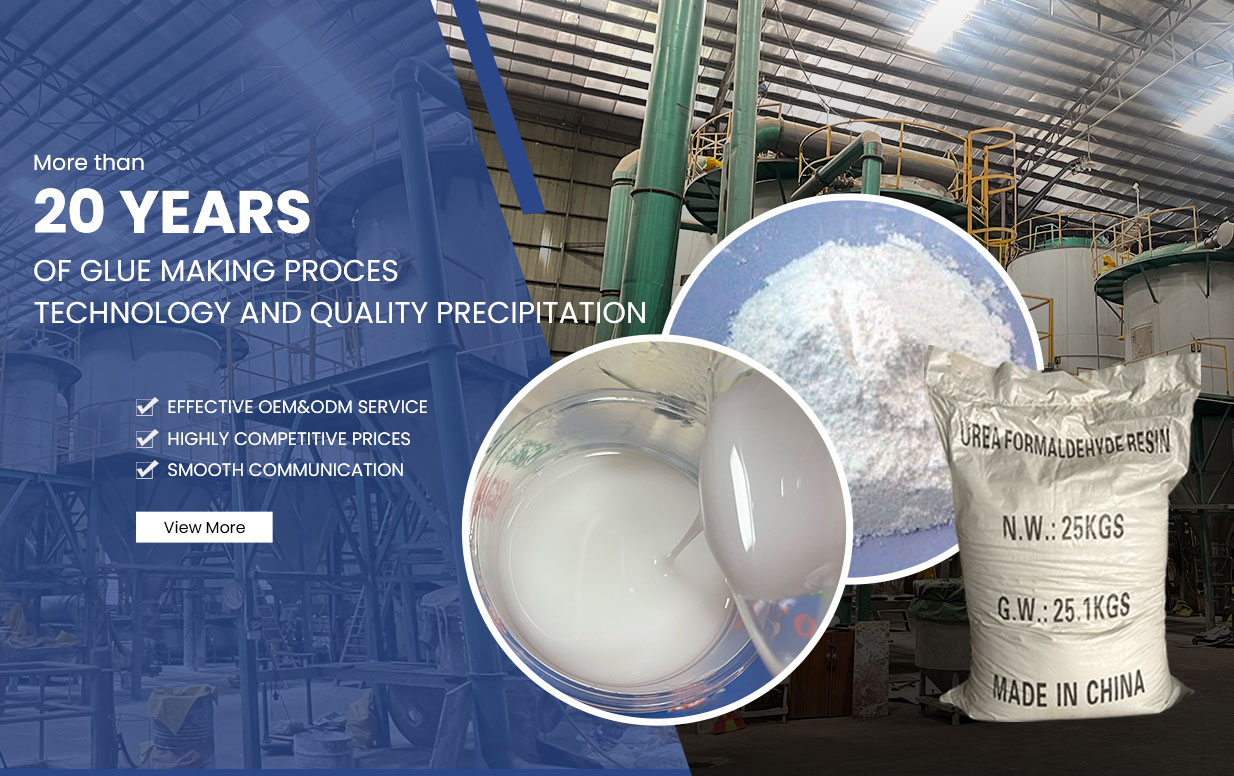
GOODLY supplies powdered uf resin products developed for bent wood and other woodworking applications. Selection should consider the wood species, number of layers, bending radius, heating method, mold material, and required finished performance.
For bent parts exposed to higher humidity, moisture resistance should be evaluated separately. uf resin performs effectively in many interior applications, but a modified resin system may be more suitable where the finished component faces demanding moisture conditions.
Wood moisture must be reasonably consistent throughout the layup. Excessively wet layers may introduce vapor and slow curing, while very dry wood can draw water from the adhesive too quickly. Moisture differences also cause uneven movement after demolding.
The bonding surfaces should be clean, freshly prepared, and free from dust, oil, or loose fibers. Layer thickness must remain within tolerance so pressure reaches the entire curved surface. One oversized strip can prevent surrounding areas from contacting the mold correctly.
Adhesive should be applied evenly without leaving dry areas or excessive buildup. Glue lines that are too thick may increase squeeze-out and movement, while insufficient spread can leave weak zones at the most highly stressed part of the curve.
The coated layers must be assembled within the validated time and positioned accurately before pressure is applied. Clamps, molds, vacuum systems, or presses should hold the complete structure firmly without creating isolated pressure points.
Curing time should be determined by the temperature reached inside the laminated part. A heated mold surface does not guarantee that the innermost glue lines have cured. Bentwood furniture manufacturers buyers should request trials that use the actual part thickness and bending radius rather than relying only on flat-panel test results.
Some recovery after mold removal comes from wood structure and cannot be controlled by adhesive alone. However, incomplete curing, poor glue coverage, or premature demolding can make spring-back significantly worse. Trial parts should be measured immediately after release and again after conditioning.
Reliable bentwood production depends on balancing adhesive strength with wood preparation, layer thickness, assembly time, pressure distribution, and full-depth curing. When these variables are validated together, resin powder can help laminated components maintain their curve through machining, finishing, transport, and furniture assembly.