jianguli@goodlyglue.com
+86-18948072250

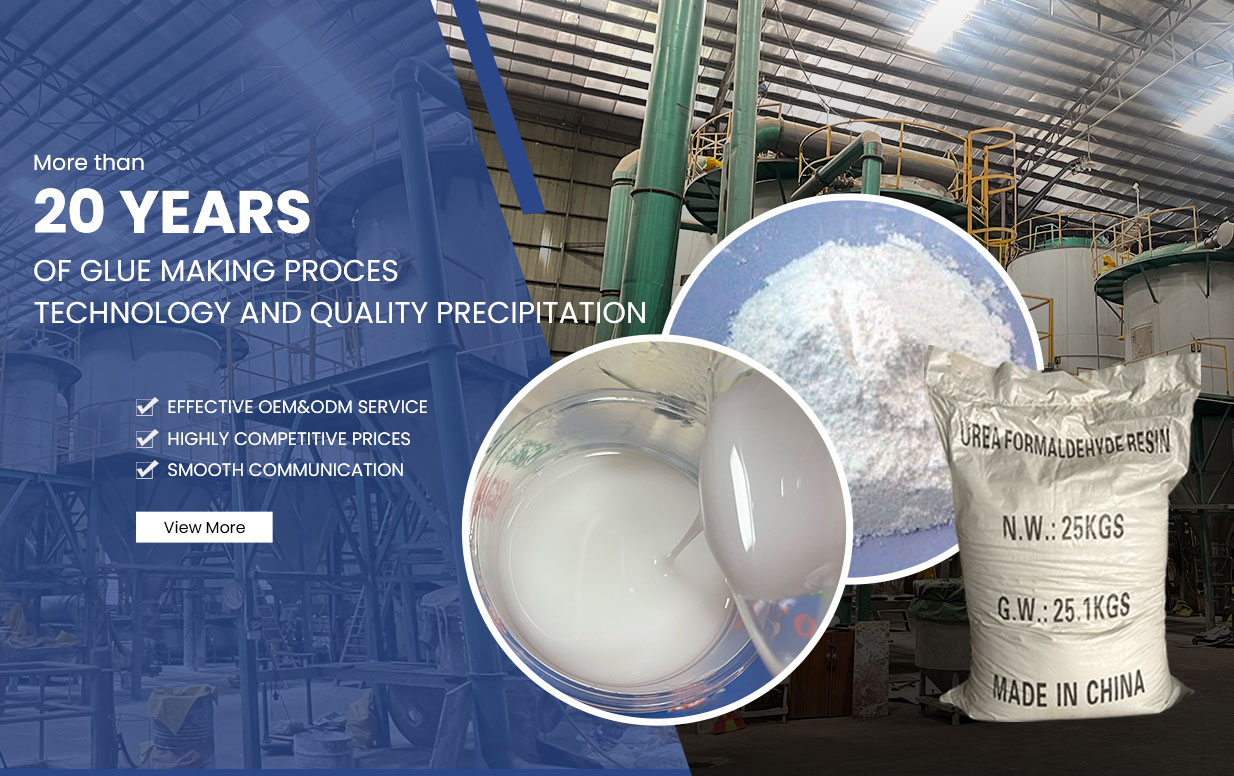
Reliable MDF production depends on how well fiber, moisture, heat, pressure, and adhesive chemistry work together. When the glue system is unstable, the board may look acceptable after pressing but later show weak internal bond, sanding defects, edge crumbling, or higher rejection during cutting and lamination. uf resin powder is widely used in MDF because it can provide fast curing, good bonding strength, and convenient storage compared with liquid glue. For continuous MDF lines, stability is not only about adhesive strength; it also affects mixing control, press cycle, formaldehyde management, and batch consistency.
MDF factories usually need a glue system that can spread evenly on fibers and react predictably under hot pressing. If the resin powder has unstable solubility or curing behavior, the fiber mat may develop uneven bonding areas. These weak points can reduce internal bond strength and increase the risk of board delamination during machining.
Stable uf resin powder for MDF helps maintain consistent glue concentration, viscosity, and curing response. This is especially important for factories producing different thicknesses, such as 2.5 mm thin boards, 12 mm furniture panels, and 18 mm cabinet boards. Different board structures require different resin addition rates, but the adhesive should still perform consistently during fiber blending and hot pressing.
Liquid resin requires strict storage conditions and has a shorter usable period. Powder resin is easier to transport, store, and dose, especially for factories that manage overseas sourcing or large-volume production planning. When stored in dry and sealed packaging, resin powder can reduce the risk of viscosity change, sedimentation, or microbial deterioration.
| Production Concern | Stable uf resin Powder Support |
|---|---|
| Storage management | Dry powder form is easier to keep in warehouse conditions |
| Batch consistency | More stable solid content and controlled reconstitution |
| Pressing control | Predictable curing under heat and pressure |
| Export handling | Lower leakage risk than liquid adhesive |
| Production planning | Easier to prepare glue according to order volume |
For MDF production, adhesive is usually sprayed onto fibers before mat forming. Resin powder must dissolve completely and blend with additives such as hardener, wax emulsion, or formaldehyde control agents. Poor dissolution can cause nozzle blockage, uneven spray, and glue spots in the board.
Stable resin powder helps operators prepare glue with fewer adjustments. A typical MDF factory may control resin addition according to fiber moisture, board density, target strength, and pressing temperature. When the adhesive quality remains stable, operators can reduce unnecessary overuse. This matters because excessive glue may increase cost and emissions, while insufficient glue can reduce board strength.
Hot pressing is one of the most sensitive stages in MDF manufacturing. If curing is too slow, the board may not reach sufficient strength before unloading. If curing is too fast, premature reaction may reduce glue penetration and weaken bonding. Stable UF resin chemistry allows factories to better control pressing time, temperature, and mat moisture.
For MDF board factory buyers, key evaluation points should include gel time, solid content after preparation, bond strength performance, moisture tolerance, and compatibility with existing production conditions. A useful resin powder should not only pass laboratory testing but also work smoothly on actual continuous or multi-opening press lines.
MDF is often used for melamine lamination, veneer overlay, painting, routing, and furniture component processing. Weak bonding may not appear immediately after pressing, but it can become visible during sanding, edge profiling, or surface decoration. Stable adhesive performance helps reduce defects such as raised fibers, uneven sanding, panel breakage, and poor screw holding.
This is why factories should evaluate resin powder together with the final application. Decorative panels need smooth surface stability, furniture boards need internal strength, and flooring substrates may require improved moisture resistance. GOODLY can adjust resin powder solutions according to MDF density, board thickness, pressing condition, and emission requirement.
Before bulk purchasing, factories should request sample testing under real production conditions. Important test items include glue preparation time, pot life, spray stability, gel time, internal bond strength, thickness swelling, surface quality, and formaldehyde emission performance. A responsible supplier should provide technical communication before shipment instead of only sending a standard product name.
Stable MDF production is built on repeatable adhesive performance. GOODLY supplies UF resin powder solutions for wood panel factories that need reliable bonding, practical storage, and smoother production control. Share your MDF board type, press temperature, target emission level, and monthly consumption to receive a suitable resin powder recommendation and quotation.