jianguli@goodlyglue.com
+86-18948072250

Construction panels need adhesive that can support strength, dimensional stability, production efficiency, and cost control at the same time. These panels may be used for interior partitions, furniture substrates, decorative boards, flooring bases, packaging structures, or other engineered wood applications. Because panel manufacturing usually involves large-volume pressing, the adhesive must be stable enough for repeated production, not only strong in a small trial.
GOODLY supplies resin powder adhesive solutions for wood-based panel production. For factories choosing a construction panel adhesive, the best option depends on board structure, service environment, press conditions, emission requirements, and procurement cost target.
Construction panels are not all used in the same way. Some are used in dry indoor areas, some face higher humidity, and some need stronger internal bonding because they carry load or support surface decoration. The adhesive choice should follow the final use of the board.
For dry interior panels, urea formaldehyde resin adhesive is widely used because it cures quickly, bonds well with wood fibers, and keeps production cost practical. For panels that require better moisture resistance, modified resin systems such as MUF resin may be more suitable. The USDA Forest Products Laboratory notes that adhesive selection should consider wood species, moisture content, surface condition, pressure, temperature, and final service exposure.
GOODLY’s product range supports different wood panel needs, helping users match adhesive type with application conditions rather than relying on one formula for every board.
urea formaldehyde wood glue is commonly used for plywood, particleboard, medium-density fiberboard, and interior laminated boards. Its main advantage is fast curing under hot pressing, good bonding strength for dry service conditions, and competitive production cost.
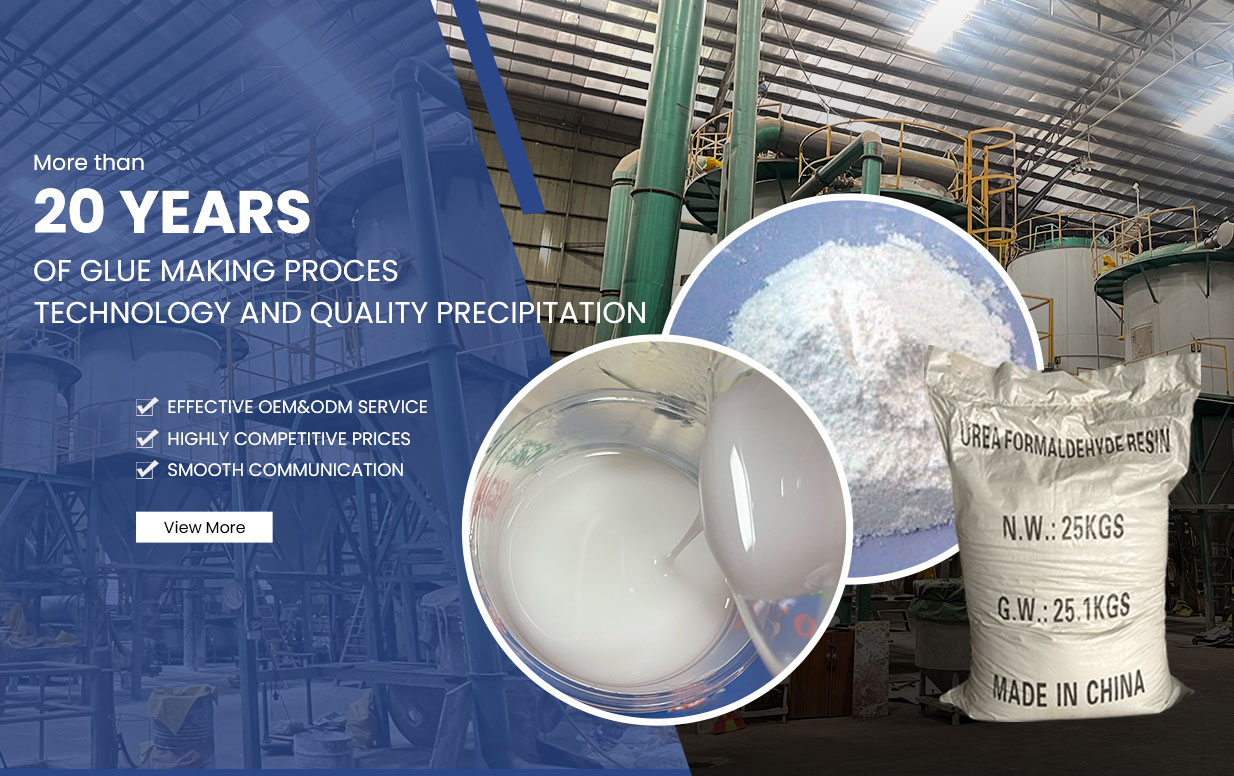
For manufacturers producing interior construction boards, UF resin powder is often a practical choice. It can be mixed with water before use, allowing factories to prepare adhesive according to daily production demand. This reduces some storage pressure compared with liquid adhesive and supports more flexible production planning.
GOODLY’s UF resin powder is designed for woodworking and panel applications. It helps manufacturers maintain stable bonding performance in plywood, veneer bonding, and wood-based board production where dry-use reliability and efficient pressing are important.
Not every panel should use the same glue. When boards may face humidity, cleaning moisture, temperature changes, or transport through damp environments, better water resistance becomes necessary. In these cases, muf resin powder or other modified resin adhesive may offer better durability than ordinary UF resin.
The Korean Journal of Wood Science and Technology describes UF resin adhesives as widely used in wood-based panels because of fast cure and cost efficiency, while also noting moisture resistance limitations in certain conditions. This explains why resin modification is important for panels exposed to higher moisture stress.
For GOODLY, this distinction is important. Interior dry boards can focus on cost-efficient bonding. Flooring bases, laminated panels, and panels with higher durability expectations may require modified resin choices.
The best adhesive for construction boards is not decided only by chemical type. Press temperature, press time, board thickness, wood moisture, glue spread rate, and assembly time all influence final bonding. A strong adhesive can still fail if it does not match the process.
A fast hot-press line needs adhesive with suitable gel time and curing speed. A thicker panel may need enough working time before pressing. A rough wood surface may need better wetting and spreadability. When these details are ignored, defects such as delamination, blistering, weak internal bond, or surface instability may appear.
GOODLY supports practical adhesive selection by considering how resin powder behaves in real production. Stable powder mixing, predictable viscosity, and consistent curing help factories keep panel quality under control during bulk manufacturing.
A useful selection process should test the board, not only the glue. Manufacturers should compare bonding strength, internal bond, water resistance, thickness swelling, surface flatness, and cutting performance after pressing.
| Board Requirement | Adhesive Focus | Suggested Direction |
|---|---|---|
| Dry interior plywood | Fast curing and strong veneer bond | UF resin powder |
| Furniture substrate | Smooth processing and stable glue line | UF resin adhesive |
| Flooring base panel | Improved moisture resistance | MUF resin powder |
| Laminated construction board | Heat stability and bonding durability | Modified resin adhesive |
| High-volume panel production | Batch consistency and cost control | Powder resin system |
This evaluation method is more reliable than judging by price alone. A lower adhesive price can become expensive if it causes panel rejection, re-pressing, sanding defects, or customer complaints.
A building material glue needs more than laboratory strength. It must support repeatable production across many batches. Powder resin adhesive is useful for manufacturers that need stable storage, convenient transport, and controlled mixing before use.
For large production orders, buyers should check powder solubility, moisture content, gel time, viscosity after mixing, shelf-life guidance, and batch traceability. These indicators help show whether the adhesive can remain stable from one shipment to the next.
GOODLY emphasizes stable resin powder supply for woodworking production. This helps factories reduce adjustment time when changing batches and supports more predictable manufacturing schedules.
The construction materials industry pays close attention to cost, but panel failure can cost far more than adhesive savings. Poor bonding may lead to delamination during cutting, swelling during storage, weak screw-holding areas, or unstable surface finishing.
A better procurement decision balances adhesive price with finished board value. For standard dry-use panels, UF resin powder may offer strong cost performance. For panels requiring better moisture resistance, a modified resin may reduce long-term risk even if the material cost is higher.
GOODLY’s advantage is providing different adhesive powder options for wood-based production, allowing manufacturers to choose according to actual board use, not only the lowest unit price.
The best adhesive for construction panels depends on application environment, board structure, pressing process, and quality target. UF resin powder is a practical choice for many dry interior wood panels because it offers fast curing, reliable bonding, and cost efficiency. Modified resin systems such as MUF resin are better suited when moisture resistance and durability become more important.
GOODLY supports construction panel manufacturers with resin powder adhesive solutions designed for stable production, convenient handling, and consistent board performance. By matching adhesive type with real panel requirements, factories can improve bonding quality, reduce production risk, and control material cost more effectively.