jianguli@goodlyglue.com
+86-18948072250

Lower adhesive cost is attractive, but the cheapest material is not always the most economical choice on a production line. For woodworking factories, the real cost of adhesive includes glue consumption, mixing loss, press efficiency, bonding strength, defect rate, storage stability, and after-sales risk. A low cost high performance adhesive should help reduce total production cost while still supporting stable bonding results.
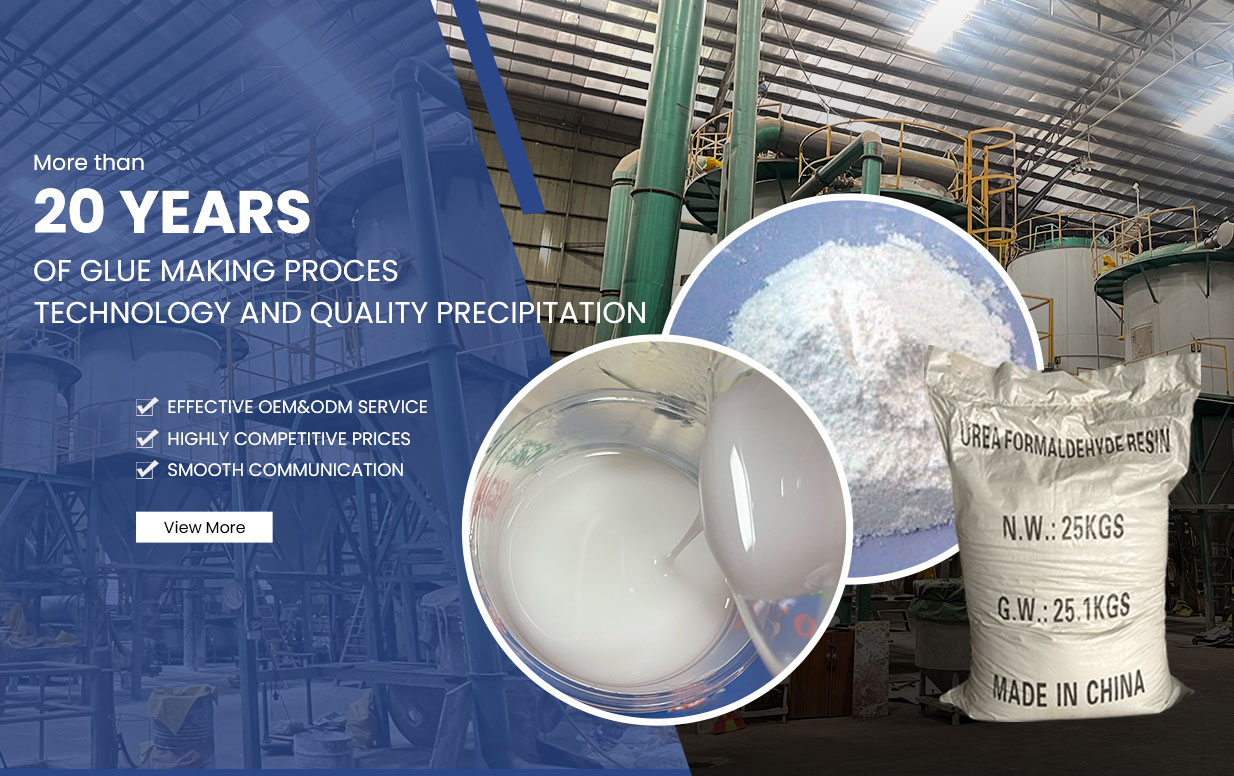
GOODLY focuses on uf resin adhesive powder for plywood, veneer lamination, bent wood, furniture components, and wood-based panel production. For manufacturers that need repeated bulk supply, the right choice is not only about price per bag. It is about whether the adhesive can keep production smooth, boards stable, and quality complaints under control.
Cheap adhesive may reduce the material invoice, but it can create higher hidden costs if the formula is unstable. When glue powder has poor solubility, operators need longer mixing time. When viscosity changes from batch to batch, the coating amount becomes harder to control. When curing speed is not matched with the press process, delamination or weak bonding may appear after trimming or sanding.
A practical way to judge adhesive cost is to calculate the total use cost per finished board. This includes adhesive dosage, rejected panels, labor for rework, press waiting time, and storage loss. The USDA Forest Products Laboratory explains that strong adhesive bonds depend on wood moisture, surface condition, bondline thickness, pressure, and curing temperature, so adhesive performance must be evaluated together with the production process.
For this reason, a cost effective wood adhesive should not only be low priced. It should also help reduce process fluctuation during daily production.
Different wood products require different adhesive behavior. Plywood needs good veneer wetting and reliable hot press curing. Particleboard needs uniform resin distribution across particles. Bent wood parts need stable bonding under forming stress. Furniture components may need clean glue lines and predictable sanding results.
uf resin adhesive powder is widely used in wood-based panels because it offers fast curing, good panel performance, water solubility, and low cost. Research published in the Korean Journal of Wood Science and Technology describes UF resin adhesives as important materials for plywood, particleboard, and medium-density fiberboard production, with advantages including fast cure and cost efficiency.
GOODLY’s uf resin powder is developed for industrial wood applications where bonding strength, mixing convenience, and production stability matter. Choosing the right formula according to board type helps prevent the mistake of using one adhesive for every process.
A reliable adhesive supplier should provide clear technical indicators. Price is easy to compare, but performance data shows whether the adhesive can support stable manufacturing. Buyers should review gel time, viscosity after mixing, moisture content, powder fineness, bonding strength, and suggested mixing ratio.
| Evaluation Item | Why It Matters | Cost Impact |
|---|---|---|
| Gel time | Shows curing speed during pressing | Reduces press delay or under-curing |
| Viscosity | Affects coating uniformity | Controls glue spread and waste |
| Solubility | Shows mixing convenience | Saves preparation time |
| Moisture content | Affects powder storage stability | Reduces caking risk |
| Bonding strength | Shows final product reliability | Lowers rejection and claims |
| Batch consistency | Supports repeated production | Reduces adjustment work |
Wood Research has reported that UF resin adhesive evaluation often includes solid content, density, pH, viscosity, catalyst addition, and gel time. These are not abstract laboratory terms. They directly influence how adhesive behaves on a production line.
An affordable industrial glue should help factories control the actual amount used per square meter. If the powder disperses unevenly, operators may increase glue spread to feel safer. This increases cost while still failing to solve weak glue spots.
Stable powder mixing allows production teams to follow a fixed water ratio and coating process. The adhesive should form a smooth solution without excessive lumps, foam, or separation. After mixing, viscosity should remain suitable long enough for normal operation.
GOODLY pays attention to practical preparation performance because woodworking factories need adhesive that can be used efficiently by operators, not only tested successfully in a laboratory. Better mixing behavior helps reduce waste before the adhesive even reaches the wood surface.
Low price becomes a problem when it sacrifices consistency. Common risks include unstable curing, excessive powder caking, poor bonding strength, short usable time after mixing, or high sensitivity to small process changes. These issues may not appear during a small trial, but they become serious during continuous production.
A safer purchasing method is to test adhesive under real factory conditions. Use the same veneer moisture, spread rate, press temperature, press time, and board thickness planned for mass production. Then check bonding strength, surface condition, trimming performance, and delayed delamination after storage.
This is especially important in the industrial procurement industry, where material decisions must support cost control and delivery reliability at the same time. A lower purchase price is only meaningful when the finished product remains stable.
Powder adhesive has an advantage in storage and shipping compared with many liquid systems, but it still needs moisture protection. Poor packaging or humid storage can cause caking and uneven dispersion. Once powder performance changes, the user may spend extra time adjusting water ratio or mixing method.
Before placing repeated orders, buyers should check packaging strength, batch labeling, shelf-life guidance, warehouse requirements, and traceability records. GOODLY’s powder adhesive format supports convenient transport and industrial use, while proper storage management helps preserve stable performance after delivery.
For bulk order planning, this point is easy to overlook. Adhesive must remain reliable not only at the supplier’s factory, but also after international transport, warehouse storage, and daily production handling.
Adhesive selection should be connected with production conditions. A supplier that understands wood bonding can help users choose a more suitable formula, rather than only offering the lowest quotation. For example, a factory using fast hot pressing may need a different curing profile from a factory making thicker laminated parts.
GOODLY supports woodworking applications with UF resin adhesive powder designed for plywood, veneer, furniture, and wood panel production. Its value lies in combining material supply with application understanding. This helps manufacturers reduce trial-and-error cost and improve long-term production planning.
Choosing a low-cost adhesive is not about buying the cheapest powder. It is about finding a material that reduces total production cost while maintaining bonding strength, mixing stability, press efficiency, and batch reliability.
GOODLY’s UF resin adhesive powder offers a practical option for wood processing factories that need stable performance and controlled purchasing cost. Strong procurement decisions come from comparing real production data, testing under actual conditions, and selecting an adhesive supplier that can support consistent quality over repeated orders.