jianguli@goodlyglue.com
+86-18948072250

High-density fiberboard production depends on precise bonding technology to achieve strength, surface smoothness, and structural stability. In the engineered board manufacturing industry, adhesive selection is a core factor that directly influences board density, durability, and processing performance. HDF boards are formed by compressing refined wood fibers under high pressure and temperature, requiring adhesives that can penetrate fibers evenly and cure reliably within short pressing cycles.
The adhesive system used in HDF production must support high-density compression while maintaining uniform bonding across the entire board structure. Without consistent adhesive performance, manufacturers may encounter internal voids, weak bonding layers, or surface defects that reduce product quality and increase rejection rates.
The most widely used adhesive in HDF board manufacturing is urea-formaldehyde resin. This type of high density fiberboard resin is preferred due to its cost efficiency, fast curing speed, and compatibility with continuous pressing lines. It allows manufacturers to achieve strong bonding at relatively low curing temperatures, which improves production efficiency.
Melamine-modified urea-formaldehyde resins are also used when higher moisture resistance is required. These formulations enhance water resistance and mechanical performance, making them suitable for applications such as flooring substrates or furniture panels exposed to variable humidity conditions.
Phenol-formaldehyde resin may be applied in specific cases where high durability and weather resistance are needed, although its higher cost and darker color limit its use in standard HDF production.
Selecting the right adhesive for HDF production requires understanding several performance indicators that affect board quality and production efficiency.
| Performance Factor | Impact on HDF Board |
|---|---|
| Bonding strength | Ensures internal fiber structure remains stable under pressure |
| Curing speed | Determines press cycle time and production output |
| Viscosity control | Affects fiber mixing and uniform distribution |
| Solid content | Influences density consistency and glue consumption |
| Water resistance | Supports performance in humid environments |
| Thermal stability | Maintains bonding integrity during hot pressing |
According to common industrial data, HDF boards are typically pressed at temperatures between 160°C and 220°C with pressures ranging from 600 to 1000 kg per square centimeter. Adhesives must cure effectively within these conditions while maintaining consistent bonding across large production volumes.
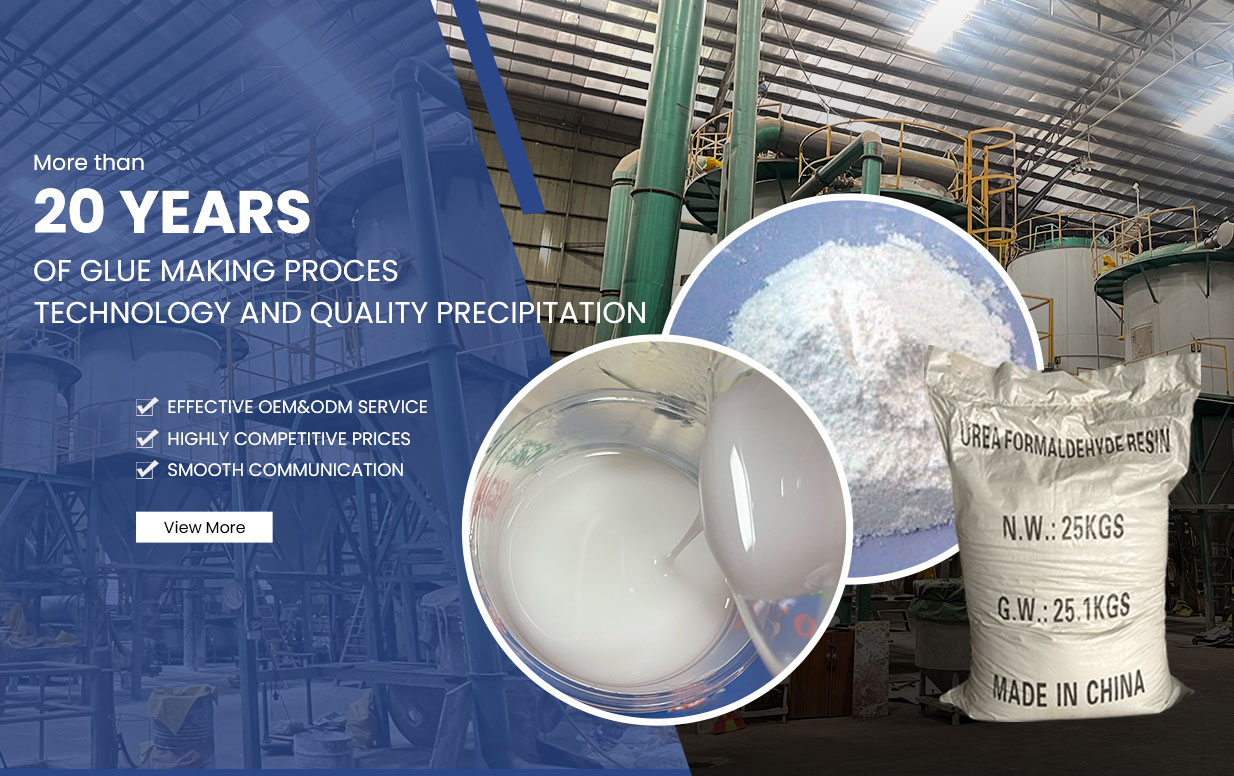
In some production setups, artificial board glue powder is used as an alternative or supplement to liquid resin systems. Powder adhesives offer advantages in storage stability, transportation, and flexible formulation adjustment. They can be mixed with water or additives before use, allowing manufacturers to control viscosity and solid content according to specific process requirements.
Powder-based adhesive systems are particularly useful for factories that require long-distance shipping or variable production scheduling. They reduce the risk of degradation during storage and provide more predictable performance when handled properly.
GOODLY offers adhesive solutions including powder forms designed for industrial board production, helping manufacturers maintain consistent mixing behavior and reliable curing performance.
The application of adhesive in HDF manufacturing involves precise control at each stage of fiber processing. Wood fibers are first refined and dried to a controlled moisture level. Adhesive is then sprayed onto the fibers using specialized equipment to ensure uniform coating.
The treated fibers are formed into a mat and transferred to a continuous or multi-opening press. During pressing, heat and pressure activate the adhesive, bonding fibers into a dense, uniform board structure. The effectiveness of the hdf board adhesive glue directly determines internal bonding strength and surface finish quality.
Any imbalance in adhesive distribution or curing behavior can lead to defects such as blistering, delamination, or uneven density profiles.
Selecting an adhesive for HDF production requires balancing performance, cost, and production compatibility. A suitable adhesive system should match the manufacturer’s press technology, fiber type, and final product requirements.
Important considerations include:
Compatibility with high-pressure and high-temperature pressing conditions
Stable curing behavior across different production batches
Consistent mixing and application performance
Ability to meet target board density and strength requirements
Adaptability to different fiber types and moisture levels
A professional adhesive supplier should provide not only product supply but also technical support to help optimize adhesive usage in real production environments.
GOODLY provides adhesive solutions designed for industrial wood processing applications. As an experienced supplier in adhesive for HDF production, the company focuses on delivering stable formulations and consistent quality for large-scale manufacturing.
Key strengths include:
Reliable production control to ensure batch consistency
Flexible adhesive options including liquid and powder systems
Technical support for process optimization and troubleshooting
Supply capability for bulk orders with stable delivery schedules
Understanding of fiberboard production processes and requirements
By aligning adhesive performance with production conditions, GOODLY helps manufacturers reduce defects, improve efficiency, and maintain consistent board quality.
HDF board production relies heavily on the right adhesive system to achieve high density, strong bonding, and stable performance. Urea-formaldehyde and modified resin systems remain the primary choices, while powder adhesives provide flexibility for certain production needs.
Selecting a suitable adhesive involves evaluating performance data, production compatibility, and supplier reliability. With proper adhesive selection and technical support, manufacturers can enhance production efficiency and ensure consistent quality across every batch of HDF boards.