jianguli@goodlyglue.com
+86-18948072250

Urea formaldehyde resin is widely used where manufacturers need fast curing, strong bonding, and efficient large-scale production. In the wood processing field, it is a core adhesive material for plywood, particleboard, MDF, HDF, decorative veneer lamination, and some bentwood components. GOODLY focuses on this product segment and offers powder-based solutions designed for stable mixing, dependable curing, and application flexibility across different engineered wood processes.
One reason this resin remains important is its production efficiency. In powder form, it is easier to store and transport, then activated during use to create a rigid adhesive system that supports continuous board manufacturing. GOODLY describes its product as suitable for hot-press production environments that need consistent glue performance, controlled curing behavior, and reliable panel quality. That makes it highly relevant to factories balancing throughput, bonding strength, and process stability.
The most common use is plywood production. In this process, the resin bonds veneer layers into a stable sheet that can handle cutting, sanding, lamination, and later assembly steps. GOODLY lists plywood-focused grades that support strong adhesion, fast curing, and efficient processing under hot pressing conditions, which helps manufacturers maintain output without giving up bond consistency.
Another major area is particleboard. Resin is applied to wood particles before pressing so the finished board can achieve the required internal strength and structural stability. For factories making furniture panels or interior-use boards, this is one of the most important UF resin applications because adhesive quality directly affects board integrity, machining performance, and downstream finishing efficiency.
The resin is also widely used in MDF and HDF production. Here, it binds fine wood fibers into dense boards used in furniture parts, decorative panels, packaging, and interior components. GOODLY highlights dedicated grades for density board manufacturing, showing that resin selection often needs to match substrate structure, board density, and production conditions rather than relying on a single universal formula.
Decorative veneer lamination is another practical use. GOODLY notes that some grades are formulated for veneer bonding, where stable glue spread, suitable hot-press response, and durable adhesion are important to appearance quality as well as panel performance. Bentwood manufacturing also uses specialized UF grades to help reduce delamination risk during forming and pressing.
For many factories, urea formaldehyde resin remains attractive because it combines workable cost, fast curing, and compatibility with established hot-press lines. GOODLY states that its powder resin can be mixed with water and used across several wood panel processes, helping production teams simplify handling while keeping the glue line firm and production rhythm efficient. In the wood adhesive manufacturing industry, this balance between performance and process control is one reason UF systems still hold an important place.
A powder format also gives practical supply-chain advantages. GOODLY indicates a one-year shelf life for certain grades, with product forms designed for storage and later blending on site. For buyers managing inventory planning, factory scheduling, and multi-batch consumption, Urea Formaldehyde Resin Powder can be a practical choice because it supports more flexible plant-side preparation than some ready-mixed adhesive systems.
The exact processing window depends on board type and formulation, but GOODLY provides useful reference ranges for some plywood and veneer adhesive grades. These include timber moisture around 8 percent to 10 percent, hot-press temperatures of 80 to 120 degrees Celsius, pressure of 8 to 16 kilograms per square centimeter, and pressing time of about 1 minute per millimeter of plate thickness. Such data matters because resin performance is closely tied to plant conditions, not only to product selection.
| Item | Typical range shown by GOODLY |
|---|---|
| Timber moisture | 8% to 10% |
| Hot-press temperature | 80 to 120°C |
| Hot-press pressure | 8 to 16 kg/cm² |
| Pressing time | 1 min per mm |
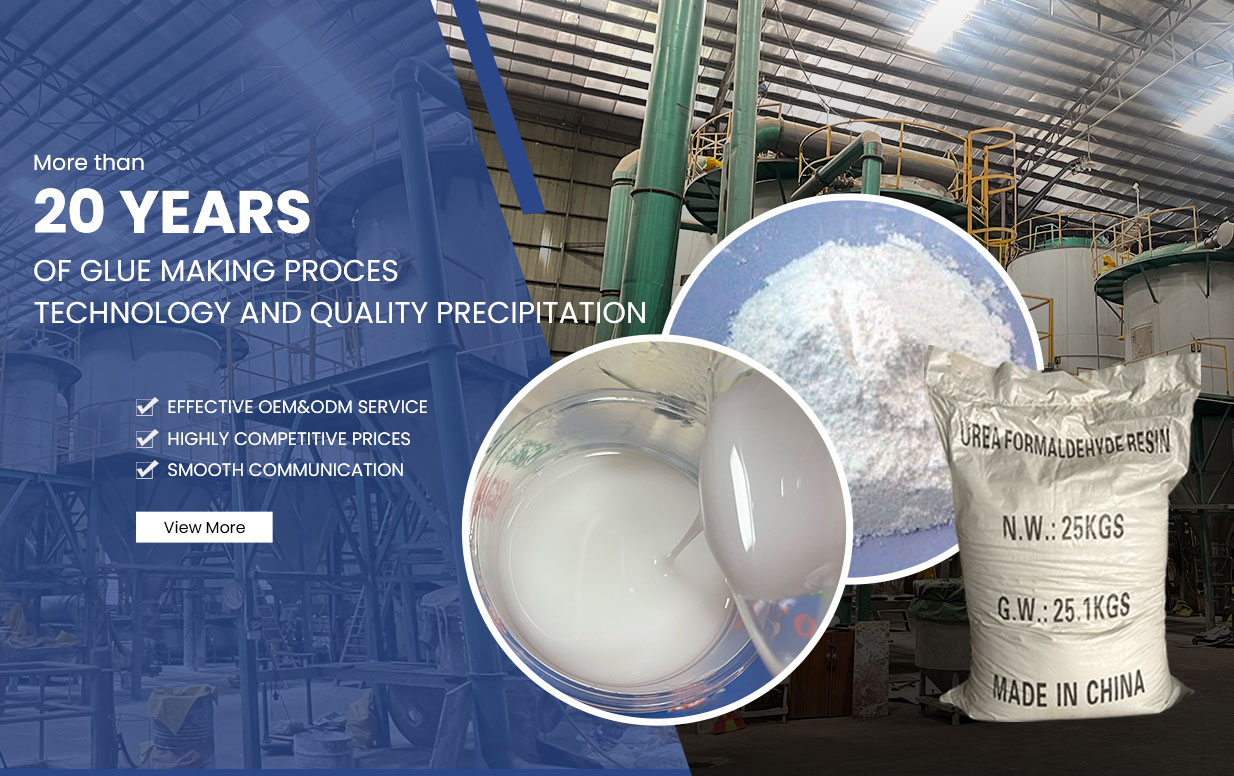
GOODLY positions itself as a manufacturer specializing in uf resin powder, with more than 20 years of glue-making experience and ongoing technology and equipment upgrades. The company also emphasizes customized adhesive solutions for changing market needs, which is important because different board plants often require different viscosity behavior, curing speed, bonding targets, and press-line compatibility. For buyers searching for an industrial wood adhesive supplier, that manufacturing focus can make procurement more efficient and technical communication more direct.
Urea formaldehyde resin is mainly used to bond wood-based materials in plywood, particleboard, MDF, HDF, veneer lamination, and selected bentwood products. Its value comes from fast curing, strong bonding, and suitability for continuous factory production. GOODLY’s product range shows how different UF grades can be matched to specific board types and processing conditions, helping manufacturers improve consistency from mixing to hot pressing. For companies comparing resin options or evaluating supply stability, a closer look at grade selection, technical parameters, and plant compatibility is often where the real decision starts.