jianguli@goodlyglue.com
+86-18948072250

Urea Formaldehyde Resin Powder remains a workhorse adhesive system in furniture manufacturing because it delivers fast curing, high bond strength, and stable machining performance when the process is controlled. This guide focuses on practical application steps, key control points, and compliance-oriented thinking for Furniture uf resin powder projects, written from a resin powder manufacturer perspective.
UF resin powder is commonly selected for interior-grade furniture components where clean glue lines, strong dry bond, and efficient pressing cycles matter. Typical furniture processes include veneer lamination, panel fabrication, and assembly bonding where the substrate moisture and press parameters can be managed consistently.
For producers running higher-throughput lines, the value is not only bond strength, but repeatability. The same formula can behave very differently if water ratio, mixing time, temperature, and catalyst dosing drift. A stable workflow is the difference between strong bonding and post-machining delamination.
Start by confirming three variables before mixing adhesive:
Substrate type and porosity, including veneer, particleboard, and density board
Target press method, cold press or hot press
Required downstream operations, sanding, CNC routing, edge processing, and wrapping
When the goal is panel lamination and later machining, a balanced cure rate is critical. Too slow increases press time and spring-back risk. Too fast can reduce open time and create dry spots.
In Density Board UF Resin Powder applications, focus on wetting behavior and glue line continuity, since the fiber surface and absorbency can pull water quickly and shorten workable time.
UF resin powder is typically mixed with water until a smooth, lump-free adhesive is achieved. The practical target is a stable viscosity that spreads evenly without over-penetrating porous boards.
Key control points that prevent performance swings:
Use consistent water temperature and mixing speed
Add catalyst only after the base mix is uniform
Track open time at shop temperature and adjust catalyst dosing to match the press rhythm
In furniture lamination, uneven mixing is a common hidden cause of weak zones that only appear after sanding or edge trimming.
A reliable glue line comes from uniform spread and controlled layup time.
Operational tips:
Keep spread rate consistent across the full panel width
Avoid long waiting time after spread, especially in warm shops
Maintain intimate contact between surfaces during pressing to prevent starved joints
For veneer and decorative layers, consistent spread reduces blistering and improves surface flatness during finishing.
Press time and pressure should match the assembly thickness and the deepest glue line. Hot pressing shortens cycles significantly, while cold pressing favors simpler equipment but needs longer dwell and careful stacking discipline.
A practical reference window used in furniture panel bonding is summarized below.
| Process Item | Typical Working Range | What To Watch |
|---|---|---|
| Cold press pressure | 150 to 250 psi for solid wood glue-ups | Higher density wood needs higher pressure |
| Cold press time | 4 to 6 hours at 70 F, 2 to 4 hours at 90 F | Temperature shifts change cure speed |
| Hot press pressure | 100 to 200 psi | Confirm full contact, avoid over-crush |
| Hot press time | 1 to 3.5 minutes at 250 F, about 121 C | Thickness and glue line depth drive time |
| Post-press conditioning | 18 to 48 hours dead stacking before machining | Reduces warp and bond disturbance |
These ranges help you set an initial process window, then refine with line trials and bond testing.
In furniture plants, adhesive performance is judged after machining, assembly, and time in storage. Build checkpoints that reflect those realities:
Incoming powder inspection for appearance consistency and storage condition
Mixed adhesive checks for viscosity stability and workable time
Press records for time, temperature, and pressure traceability
Post-press shear and peel evaluations tied to real substrates
Machining observation for edge chipping, delamination, and veneer lift
A strong program links each batch to a measurable process record, making root-cause analysis faster when a defect appears.
If finished furniture is sold into regulated markets, formaldehyde emission control becomes part of the sourcing and production plan, not a last-minute test.
In the United States, TSCA Title VI sets emission limits for composite wood panels used inside furniture. The limits include 0.05 ppm for hardwood plywood, 0.09 ppm for particleboard, 0.11 ppm for medium-density fiberboard, and 0.13 ppm for thin medium-density fiberboard. In Europe, EN 717-1 E1 is commonly referenced with a chamber limit of 0.124 mg per cubic meter.
A practical approach is to align resin selection, press conditions, and downstream panel sourcing with the target market requirement early, then maintain consistent documentation across production lots.
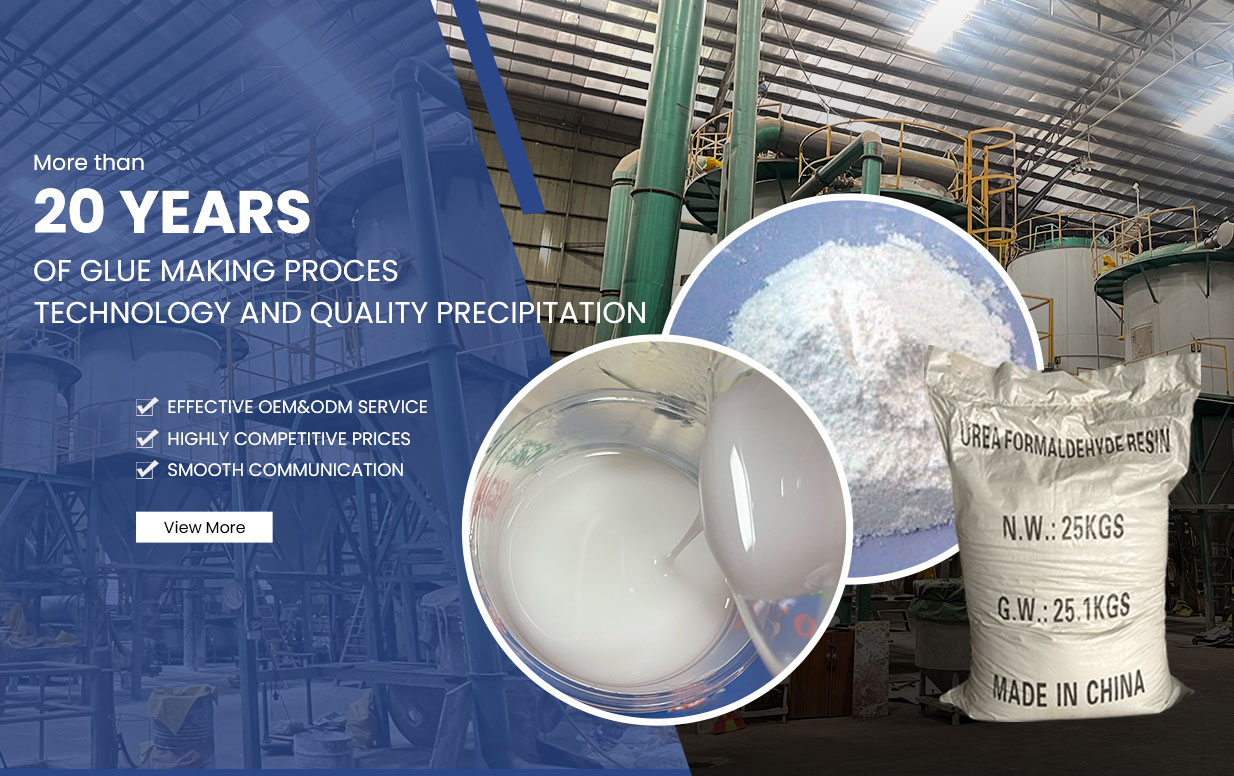
GOODLY is a dedicated urea formaldehyde resin powder manufacturer based in Foshan, a major furniture manufacturing hub. The company highlights more than 20 years of experience, customization capability for different customer process needs, ongoing equipment and technology upgrades, and a product portfolio built around furniture-relevant applications including particleboard and density board adhesive powders.
For furniture factories that value line stability, the most important benefit is not a single parameter, but a controlled resin supply paired with application guidance that matches real press conditions and substrate behavior.
UF resin powder can deliver clean bonding and efficient production in furniture lines when mixing discipline, spread control, and press parameters are standardized and verified with the right checkpoints. With a manufacturer-led approach to formulation selection and process control, Furniture UF Resin Powder projects become easier to scale with fewer quality surprises. For technical matching on substrates, press cycles, and performance targets, share your process conditions and panel structure with GOODLY to receive a practical application recommendation and trial plan.