jianguli@goodlyglue.com
+86-18948072250

uf resin curing is not a single fixed temperature. It is a temperature window that depends on catalyst system, resin formulation, mat moisture, press pressure, panel thickness, and the heat transfer efficiency of the press. For wood-based panels and related assembly lines, the goal is simple: reach a cure state that delivers bond strength, dimensional stability, and controlled emissions, without overbaking the board surface or starving the core of heat.
From a manufacturer’s perspective, the most useful way to plan curing temperature is to separate resin reaction temperature from production press temperature.
Laboratory thermal analysis commonly reports the main curing reaction peak for UF adhesive systems around the 90 to 110 °C range, depending on formulation and wood interaction. A Wood Research study using DSC reported an exothermic peak at 94.6 °C for UF adhesive alone and 100.2 °C when mixed with poplar wood flour at a 10 °C per minute heating rate. Data origin: Wood Research, 2011, DSC curing characteristics study.
In real production, hot-press setpoints are higher because heat must travel through the mat into the core, and the press cycle must complete within throughput targets. A review of particleboard hot pressing conditions notes that UF-bonded boards in multiple studies used 120 to 160 °C press temperatures. Data origin: Forests, 2023, review of pressing parameters for particleboard manufacturing.
A practical baseline for many UF-bonded wood panel lines is:
Resin reaction onset and peak zone: roughly 90 to 110 °C in lab characterization, influenced by catalyst and wood chemistry.
Press platen temperature setpoint: commonly 120 to 160 °C to reliably cure the core within a production cycle.
| Process target | Common temperature range | What it controls most | What can go wrong |
|---|---|---|---|
| Cure chemistry becomes active | 90 to 110 °C | Gel and crosslink development rate | Slow cure if catalyst activation is delayed |
| Standard hot pressing setpoints | 120 to 160 °C | Core cure completion and line speed | Surface overcure, brittleness, press sticking, core undercure if time is too short |
| Higher-temperature fast cycles | 140 to 180 °C | Shorter press time in some plywood programs | Higher risk of pre-cure at the surface and uneven bond if spread and layup are not controlled |
Many UF systems use ammonium salt catalysts that generate acidity as temperature and hold time increase, accelerating cure. This means the same press temperature can behave differently if catalyst loading, storage time, or mixing uniformity changes. Data origin: International Journal of Adhesion and Adhesives, 2019, catalyst behavior in UF curing.
A press at 150 °C does not guarantee the core is at 150 °C. Board thickness, furnish moisture, and density profile determine how quickly the core enters the cure zone. This is why manufacturers often specify temperature together with press time, pressure curve, and target core temperature verification.
Wood chemistry and fillers can shift curing behavior and reaction rate. That is one reason lab characterization and pilot pressing data are both needed when changing furnish species, filler type, or target emission class.
To reduce risk in bulk supply, a curing temperature recommendation should be backed by QC that links resin behavior to panel performance:
Batch-to-batch reactivity control using thermal behavior tracking and gel time consistency checks
Moisture and particle size stability for predictable mixing and spreading behavior
Free formaldehyde management aligned to the target market emission pathway
For export-related verification, EN 717-1 chamber testing conditions are defined at 23 °C ± 0.5 °C and 45 % ± 3 % relative humidity, which matters when correlating resin formulation and pressing cure to measured emissions. Data origin: EN 717-1 test condition summary published by Oregon Wood Innovation Center materials.
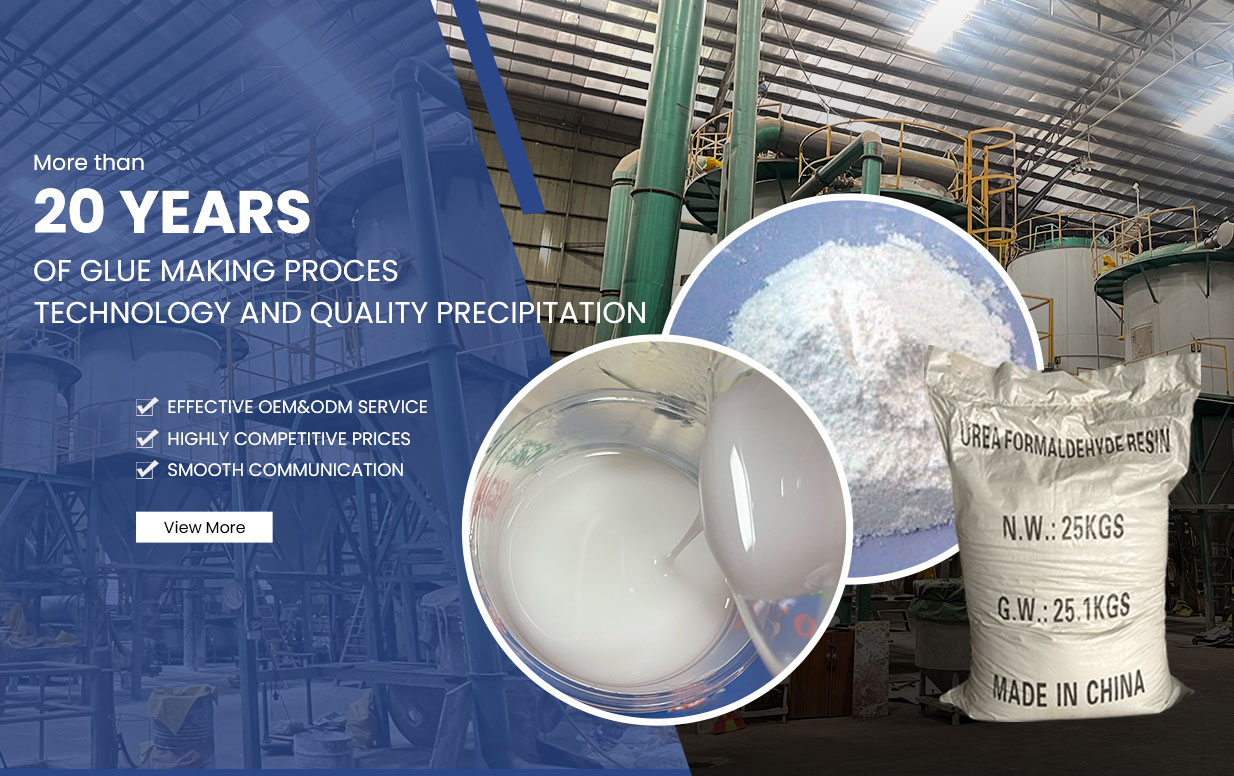
GOODLY is a dedicated Urea Formaldehyde Resin Powder manufacturer focused on industrial consistency rather than trading consolidation. The product line includes panel-oriented grades for MDF and plywood, and the site lists typical powder characteristics like 80 to 120 mesh particle size and controlled moisture and free formaldehyde positioning for environmental requirements. Data origin: GOODLY product pages and company profile.
For OEM and ODM programs, the most reliable curing temperature recommendation comes from matching resin reactivity to your press profile and furnish. That includes confirming mixing ratio, catalyst selection, spread rate, assembly time, and the temperature-time curve that the core actually experiences. This is where a solution provider approach matters for bulk order stability, especially when the line must run through seasonal humidity changes.
Confirm target board type, thickness, and press cycle limits
Define catalyst system and acceptable pot life at plant temperature
Validate core temperature reach and cure completion, not only platen setpoint
Align resin choice with the required emission verification route and destination market expectations
Lock a QC protocol for every lot delivered, including reactivity and moisture stability
For most projects, UF cure chemistry becomes active near the 90 to 110 °C range in lab behavior, while production hot pressing commonly operates around 120 to 160 °C to ensure the core reaches full cure within throughput targets.
Share your board structure, press schedule, catalyst plan, and target emission pathway, and GOODLY can recommend a production-ready cure window for uf resin powder grades, including a Urea Formaldehyde Wood Glue program that fits your line speed and consistency targets.