jianguli@goodlyglue.com
+86-18948072250

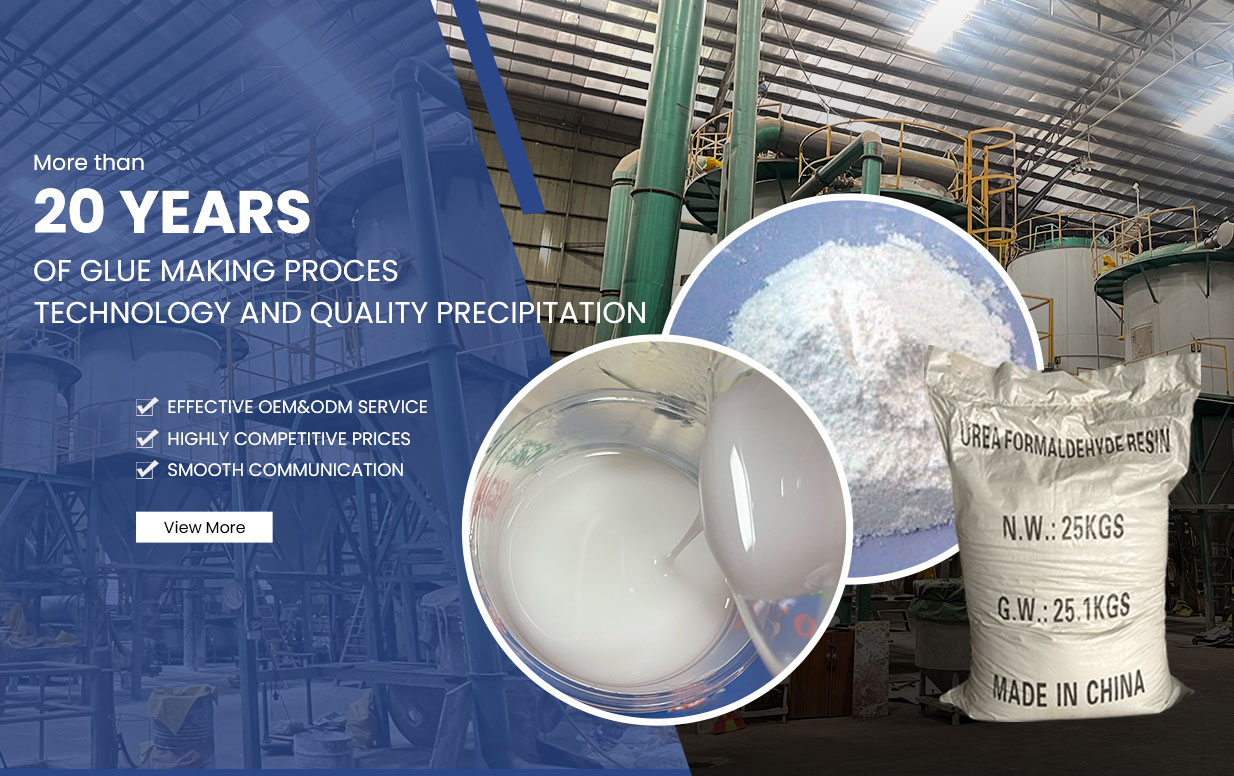
Density Board UF Resin Powder is a urea-formaldehyde thermosetting adhesive in dry powder form designed to bond wood fibers during the production of medium-density fiberboard and high-density fiberboard. In a typical MDF or HDF line, the powder is dispersed into a controlled glue mix, applied onto fibers, and then hot-pressed so the resin crosslinks and locks fibers into a stable panel structure. GOODLY’s Density Board uf resin powder is formulated specifically around MDF and HDF pressing conditions, with clear operating parameters for moisture, temperature, pressure, and working time.
In dry-process fiberboard, bonding quality depends on whether adhesive can be distributed evenly across fibers and then cure quickly and consistently under press heat. UF resins cure through polycondensation during hot pressing, creating a rigid network that provides panel integrity. Published research on UF-bonded fiberboard reports curing behavior around the hot-press range, supporting why press temperature control matters for predictable bonding and reduced defects.
Because the resin is supplied as a powder, it simplifies storage and shipping compared with some liquid systems, while allowing the plant to prepare glue on demand. This can be useful for bulk order planning and for factories that want tighter control of batch-to-batch viscosity and pot life.
For density board production, the most practical definition is not just chemical composition, but the process window the resin is built for. GOODLY provides a parameter set for Model 180 and 180A covering wood moisture, press temperature, press pressure, press time, and glue spread range.
| Item | Typical value for GOODLY Density Board UF Resin Powder |
|---|---|
| Model | 180 or 180A |
| Product form | White powder |
| Shelf life | 1 year |
| Optimal timber moisture | 8 to 10 percent with tolerance control |
| Hot-press temperature | 80 to 120°C |
| Hot-press pressure | 8 to 16 kg per cm² |
| Hot-press time | 1 minute per mm of board thickness |
| Suggested coating quantity | 150 to 180 g per m² single side |
| Curing agent dosage | 2 to 5 per mille of blended glue |
| Working time examples | Up to 24 to 48 hours without additives, about 3 hours after curing agent addition |
These values are important because they link resin selection directly to throughput, thickness range, and press schedule. If your line runs thinner boards at higher speed, pot life, catalyst strategy, and press temperature uniformity become even more critical.
A frequent cause of bonding variation is not resin quality, but mixing order and hydration consistency. GOODLY’s recommended method uses staged water addition and a short waiting period before use to reach best performance.
Operational practices many plants adopt to reduce scrap include:
Control glue preparation temperature so viscosity and flow stay consistent during shifts.
Match glue ratio to fiber moisture because wetter furnish can slow cure and increase steam blow risk, while overly dry furnish can reduce wetting and coverage.
Use catalyst timing intentionally: once curing agent is added, the activity period shortens significantly, so plan batch size to avoid waste and gelation.
If you run multiple board grades, GOODLY can act as a solution provider by aligning resin selection and mixing targets to your press schedule and board density range, instead of forcing a single formula across all lines.
UF systems are widely used in interior wood panels, but formaldehyde control is a central purchasing and quality topic. In the United States, TSCA Title VI regulates formaldehyde emissions for key composite wood panels, including MDF, thin MDF, particleboard, and hardwood plywood, and it sets emission limits by product type.
A practical reference point used in indoor air discussions is the World Health Organization’s guideline of 0.1 mg per m³ over 30 minutes to prevent sensory irritation in the general population.
For manufacturers of MDF and HDF products that enter regulated markets, resin choice must support a process capable of consistent emissions performance. That typically means tighter control of:
Resin formulation and free formaldehyde management
Catalyst type and addition rate
Press temperature profile and press time stability
Post-press conditioning and storage practices
From a manufacturing perspective, choosing a resin supplier is about predictable throughput, stable quality, and technical response speed. GOODLY positions itself as a specialized urea-formaldehyde resin powder manufacturer with long-term production experience, customization capability, and ongoing process upgrades.
When you evaluate suppliers for continuous production, GOODLY’s advantages align with common plant priorities:
Clear production parameters for MDF and HDF press conditions, supporting faster scale-up and fewer trials
Consistent batching approach suitable for high-volume panel lines where variation directly becomes sanding loss and rejects
Customization readiness for different density targets, thickness ranges, and working-time needs, useful for OEM/ODM style projects that require controlled performance rather than a generic glue powder
Density board UF resin powder is a process-defined adhesive engineered to bond MDF and HDF fibers efficiently under hot pressing. The right product is the one that matches your moisture window, press temperature and pressure, board thickness schedule, and working-time requirements. With defined operating parameters and manufacturing-focused support, GOODLY helps producers stabilize bonding performance, improve production predictability, and prepare for emissions compliance expectations in regulated markets.