jianguli@goodlyglue.com
+86-18948072250

Selecting a plywood adhesive supplier is an important decision for manufacturers because adhesive quality directly affects production consistency, bonding strength, and finished panel performance. A supplier may offer competitive prices, but long-term cooperation requires much more than a low quotation. Product consistency, technical specifications, production capacity, delivery reliability, and problem-solving support all influence whether the supplied adhesive can meet actual manufacturing requirements. Evaluating these factors before establishing a purchasing relationship helps plywood factories reduce supply risks and maintain stable production.
Price is usually one of the first factors considered during supplier evaluation. However, the lowest-priced adhesive does not necessarily provide the lowest overall production cost.
For example, inconsistent adhesive viscosity may require repeated adjustments during preparation. Unstable curing characteristics can affect pressing efficiency, while poor bonding performance may increase rejected panels. These additional expenses can quickly offset any initial purchasing savings.
A reliable supplier should provide adhesive products with consistent characteristics so that manufacturers can maintain predictable production conditions. The actual value of a supplier should therefore be evaluated through material performance and its influence on total manufacturing costs.
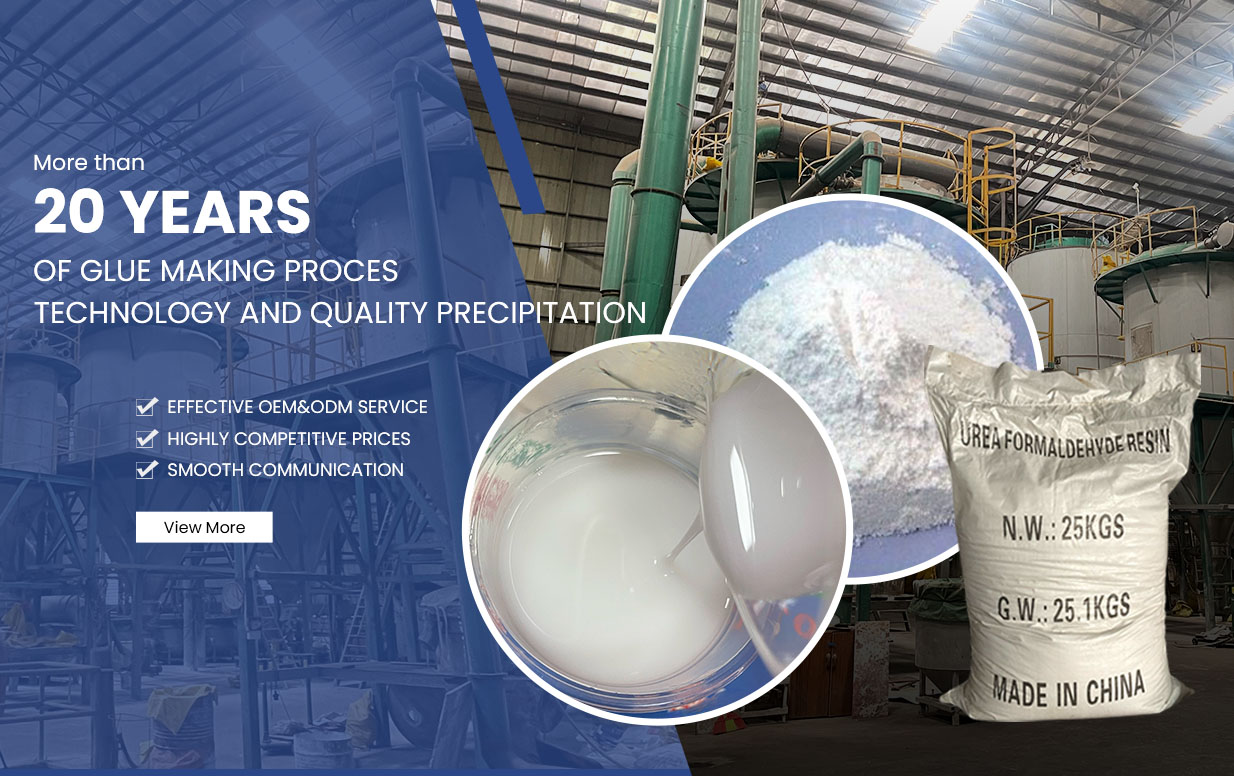
Plywood production requires adhesive materials that match specific veneer conditions, panel structures, and pressing requirements. A suitable Plywood Adhesive should maintain consistent performance across different production batches.
Manufacturers should pay particular attention to formulation consistency, moisture condition, powder appearance, mixing behavior, and bonding performance. For powder-based adhesive products, stable particle characteristics and proper packaging are also important because moisture exposure may affect storage and preparation.
Technical specifications should clearly identify the recommended application conditions. These may include mixing ratios, viscosity requirements after preparation, working time, pressing temperature, and applicable bonding standards.
Not every plywood factory uses the same manufacturing process. Differences in veneer species, panel thickness, production speed, and hot-press equipment can influence adhesive requirements.
A dependable supplier should understand these differences and provide technical communication based on actual production conditions.
For instance, a factory producing thin interior plywood may have different adhesive requirements from one manufacturing thicker panels or moisture-resistant products. The supplier should be able to discuss suitable formulations and recommend trial procedures rather than offering one general solution for every application.
This technical understanding is particularly valuable when factories introduce new panel specifications or optimize existing production lines.
Supplier evaluation should combine product verification, manufacturing capability, and delivery performance.
The following comparison provides a practical reference:
| Evaluation Area | What Buyers Should Verify | Why It Matters |
|---|---|---|
| Product quality | Batch consistency and technical specifications | Maintains stable bonding results |
| Manufacturing capacity | Regular output and production planning | Supports continuous purchasing |
| Quality management | Incoming material and finished-product inspection | Reduces quality variation |
| Packaging | Moisture protection and packaging strength | Protects adhesive during transportation |
| Delivery capability | Lead times and order coordination | Supports production scheduling |
| Technical support | Application guidance and problem analysis | Improves production compatibility |
A plywood adhesive manufacturer factory direct arrangement may also provide clearer communication about product specifications, production schedules, and order requirements. However, direct factory access should still be supported by actual quality verification.
Sample testing allows manufacturers to evaluate adhesive performance using their own veneer materials and production equipment.
A useful trial should examine preparation behavior, spreading consistency, curing performance, and finished-panel bonding strength. Testing should follow the intended production conditions rather than relying entirely on laboratory samples.
GOODLY recommends recording the results of each trial, including adhesive consumption, preparation time, pressing parameters, and panel inspection results. These records provide a reference when evaluating future batches.
A reliable supplier is one that can maintain consistent product quality as purchasing quantities and production requirements change. Stable communication, accurate documentation, reasonable delivery planning, and timely responses to technical questions are all part of a dependable supply relationship.
Manufacturers should also establish clear specifications and acceptance criteria before regular purchasing begins. This reduces misunderstandings and makes incoming quality inspection more effective.
Ultimately, selecting a reliable plywood adhesive supplier means evaluating the complete supply capability rather than focusing on price alone. Consistent materials, verified production performance, and dependable cooperation create a stronger foundation for long-term plywood manufacturing.