jianguli@goodlyglue.com
+86-18948072250

Exported wood panels may be evaluated under emission requirements that differ by destination, product type, test method, and end use. A formaldehyde-reduction additive can support compliance by reacting with residual formaldehyde in a UF-bonded panel, but it cannot replace controlled resin formulation, accurate dosing, stable pressing, and verified laboratory testing. The most effective approach treats the additive as one component of a complete emission-management system.
A Formaldehyde Removal Additive is incorporated into the adhesive system so it can capture or decompose part of the free formaldehyde remaining after resin curing. Reducing this residual amount can lower the panel’s later emission potential.
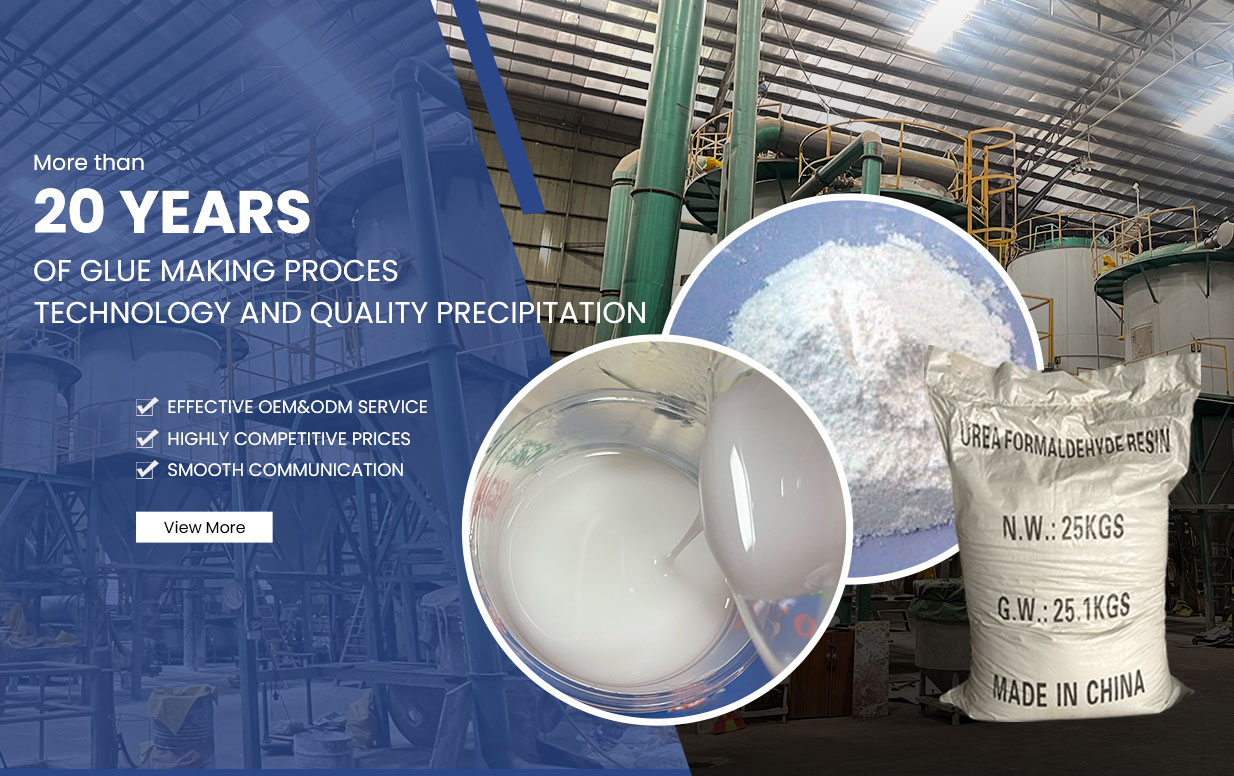
GOODLY describes its powdered Formaldehyde Decomposer as an additive for urea-formaldehyde resin glue. Because chemical compatibility and production conditions vary, the dosage should be established through testing rather than copied from another line.
“Low formaldehyde” is not a complete purchasing specification. Export panel manufacturers buyers need to define the destination market, panel category, required emission class, test standard, sampling rule, and acceptable report issuer before production begins.
Different methods may use chambers, desiccators, gas analysis, or perforator extraction. Their results are expressed in different units and should not be directly compared without a recognized technical conversion. Passing one method does not automatically prove conformity under another.
Destination country or region
Product type and thickness
Required emission limit
Mandatory test method
Conditioning and sampling procedure
Certification or third-party report requirements
Testing frequency for repeat orders
More additive does not always produce a better panel. Excessive addition may alter adhesive pH, curing speed, viscosity, water tolerance, or final bond strength. A low formaldehyde wood panel additive must therefore be assessed alongside mechanical performance.
| Trial Item | Why It Matters |
|---|---|
| Mixed-glue viscosity | Confirms application remains stable |
| Pot life | Prevents premature curing in the blender |
| Gel or curing time | Helps align resin activity with pressing |
| Internal bond strength | Detects loss of structural performance |
| Thickness swelling | Evaluates moisture-related stability |
| Formaldehyde emission | Confirms the intended reduction |
| Surface appearance | Reveals staining or pressing defects |
Panel emissions can vary even when the formulation is unchanged. Resin spread, furnish moisture, press temperature, press duration, density profile, and post-press conditioning all affect the final result. Inconsistent dosing is especially risky because a small additive may be difficult to distribute uniformly across a large adhesive batch.
Manufacturers should use calibrated weighing equipment, written mixing sequences, timed agitation, and batch identification. Samples should be taken from several panel positions and across multiple press loads. Testing only one favorable sample provides little evidence of repeatable production.
Begin with a control panel made under the existing formulation. Produce several trial groups with carefully selected additive levels while keeping other variables stable. Compare emission results with bond strength and dimensional properties, then repeat the preferred formulation under normal line conditions.
Third-party testing should use the exact method required by the target market. Production retention samples and batch records make it easier to investigate changes caused by raw material variation, seasonal humidity, or equipment adjustment.
Technical evaluation should cover compatibility with the selected resin, recommended incorporation method, storage conditions, batch consistency, and supporting test data. Buyers should also provide panel composition and press information so the formulation can be assessed under realistic conditions.
Export compliance is achieved through documented repeatability, not through an additive claim alone. Combining controlled chemistry, stable manufacturing, representative sampling, and destination-specific testing gives panel producers stronger evidence that every shipment can meet the required emission and performance criteria.