jianguli@goodlyglue.com
+86-18948072250

Plywood performance is decided long before the panel leaves the press. One of the most important factors is how the adhesive behaves between veneer layers under heat, pressure, and controlled moisture. In many interior-grade panel applications, uf resin for plywood remains a widely used option because it supports efficient curing, stable bonding, and cost control across high-volume production lines. When the resin system is matched well with veneer condition and press parameters, the result is a cleaner bond line, more reliable panel strength, and better processing consistency.
UF resin is a thermosetting adhesive system. In plywood production, it is prepared into a usable glue mix, spread across veneer surfaces, assembled into a layup, and then cured during hot pressing. Once heat activates the reaction, the resin hardens into a rigid network that connects adjacent veneer sheets into a single board. This curing step is what turns a stack of loose layers into a panel with structural integrity, dimensional stability, and processing efficiency for downstream sanding, trimming, laminating, or finishing. GOODLY describes its plywood-grade UF powder as a resin designed for strong bonding, steady application, and repeatable production outcomes in wood processing.
A powder resin system is valued in part because it helps mills manage storage, transport, and on-site mixing. The powder is blended into glue before application, which allows the factory to adjust the working system to its own veneer species, spread method, and line speed. GOODLY’s plywood resin page highlights easy mixing and consistent usability, while also noting the addition of a curing agent at a controlled ratio. That matters because an unstable mix can quickly lead to uneven spread, short pot life, or weak bond formation.
After preparation, the adhesive must wet the veneer surface evenly. Good wetting improves contact between wood fibers and the resin system, helping the glue line remain continuous rather than patchy. In practical production, this influences bond uniformity across the full panel area. A consistent glue line also helps reduce common defects such as local delamination, blistering, and panel weak spots that only appear after cutting or storage. GOODLY positions its material as a product built for predictable application in plywood and woodworking environments where consistency matters as much as nominal strength.
The real transformation happens in the press. According to GOODLY’s plywood product data, the recommended hot-pressing temperature is 80 to 120 degrees Celsius, pressure is 8 to 16 kg per square centimeter, and press time is about 1 minute per millimeter of board thickness. Under these conditions, the adhesive cures and locks the veneer stack into a stable panel. Proper curing is critical because under-curing can weaken the board, while over-aggressive pressing can damage veneer quality or create internal stress.
In the wood panel manufacturing industry, productivity and consistency often matter just as much as bond strength. UF systems are widely used because they can support relatively fast press cycles and a hard cured bond line suited to many interior applications. For a plywood mill, that translates into better throughput, more controlled manufacturing cost, and easier standardization across repeated runs. GOODLY also emphasizes thermal stability, controlled curing behavior, and product customization, which are useful when mills need adhesive performance aligned with their own board structure and operating conditions.
Even a capable resin cannot compensate for poor process control. Several production variables strongly affect how the bond develops:
| Factor | Why It Matters |
|---|---|
| Veneer moisture | Excess moisture can disrupt curing efficiency and glue penetration. GOODLY lists optimal timber moisture at 8 to 10 percent with tight control tolerance. |
| Resin mix stability | A balanced glue mix supports uniform spreading and more predictable press results. |
| Press temperature | Too low may leave the adhesive under-cured. Too high may create surface problems or stress. |
| Press pressure | Adequate pressure helps close the veneer stack and build proper contact across the glue line. |
| Press time | The curing window must match thickness and line speed to avoid weak internal bonding. |
These factors are not isolated. They interact with one another, which is why many panel plants prefer suppliers that can support formula matching rather than pushing a one-size-fits-all product. GOODLY presents customization and ongoing technical upgrading as part of its manufacturing approach, supported by more than 20 years of glue-making experience and a product range built around plywood, particleboard, density board, and veneer applications.
When plywood fails, the issue often starts at the glue line. Inconsistent spreading, poor veneer moisture control, unstable activity period, or incomplete curing may all lead to delamination risk. GOODLY’s recent technical content on plywood bonding also points to loss of glue-line control as the first weak point in many factories. This is why resin selection should not focus only on headline strength. A practical plywood bonding adhesive must also support working stability, predictable curing, and line compatibility during routine factory use.
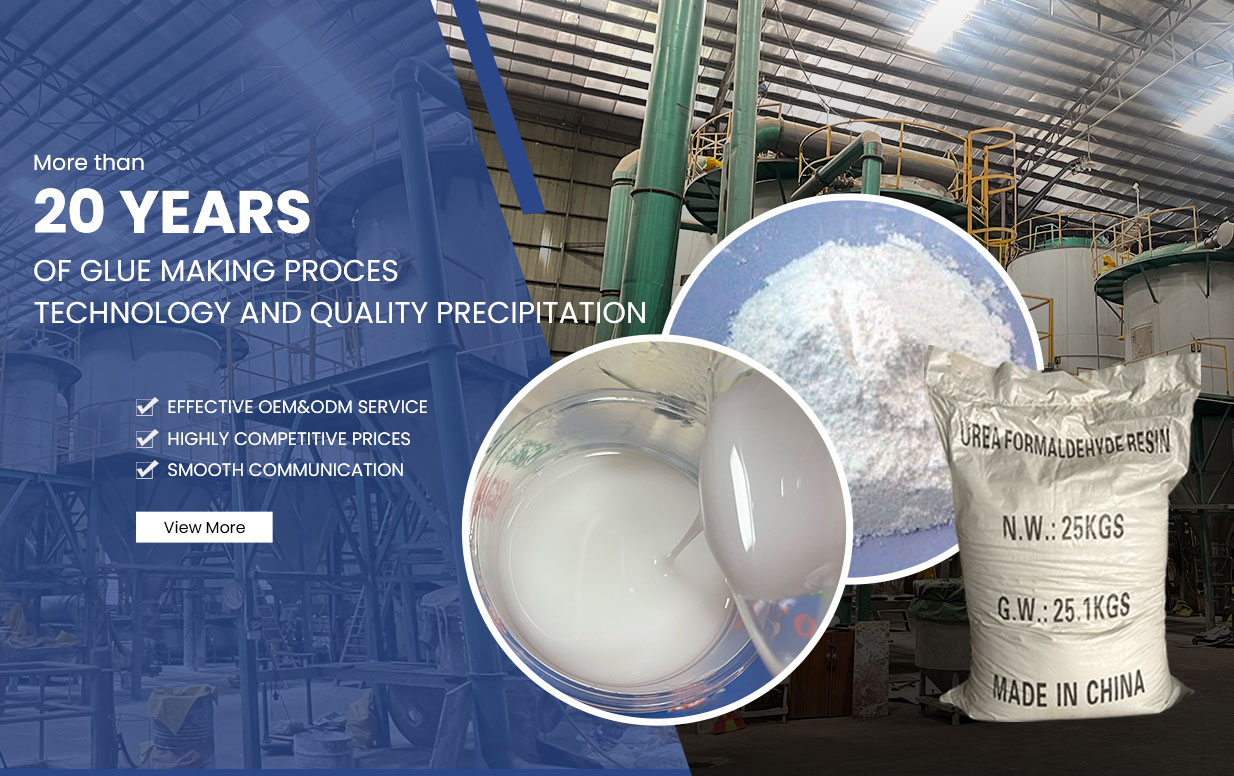
GOODLY focuses on Urea Formaldehyde Resin Powder manufacturing and positions itself around process-fit supply rather than generic material trading. Its website highlights a base in Foshan, long-term glue making experience, continuous equipment and technology upgrades, and the ability to provide customized resin products for different wood-based panel uses. For plywood producers, that kind of supplier profile can be useful when the target is not only bond strength, but also batch consistency, working efficiency, and stable production results across ongoing orders. GOODLY’s plywood-grade UF resin adhesive glue is presented as a solution developed specifically for plywood and woodworking applications, with practical process data that can help mills align adhesive choice with production conditions.
UF resin works in plywood production by creating a controlled glue line that cures under heat and pressure to bind veneer layers into a single, stable board. Its value comes from more than simple adhesion. It supports production speed, bonding consistency, and manufacturing control when the resin system, veneer condition, and pressing parameters are aligned. For plywood manufacturers seeking repeatable panel quality, a supplier that understands formulation, curing behavior, and factory operating realities can make a measurable difference. GOODLY’s product focus, technical background, and plywood-oriented resin range make it a practical partner to evaluate when stable adhesive performance matters across daily production.