jianguli@goodlyglue.com
+86-18948072250

Resin adhesives sit at the intersection of chemical safety, product performance, and downstream compliance. For manufacturers using urea-formaldehyde based systems in plywood, particleboard, decorative veneer, and impregnated paper processes, “meeting a standard” rarely means only one document. It typically means aligning the adhesive formulation, labeling, documentation, and finished-panel results with the rules that apply in the destination market and end-use environment.
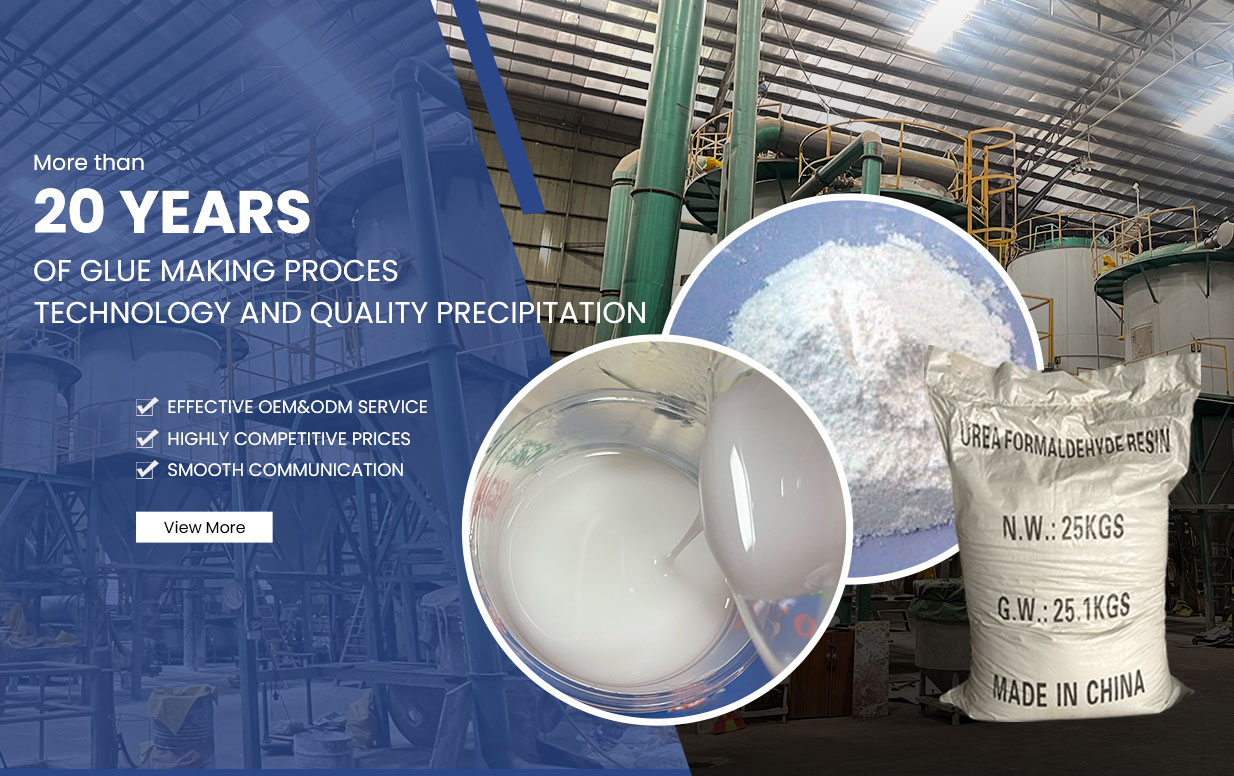
GOODLY focuses on urea-formaldehyde resin adhesive powder and related wood-industry resin systems designed for industrial production, where consistent curing and bond performance are essential for stable output.
Most resin adhesives are regulated as chemical mixtures. Even when the adhesive is supplied as a powder, customers generally need hazard communication that is compatible with the local framework and easy to audit.
In the United States, the OSHA Hazard Communication Standard requires suppliers to classify hazards and provide a Safety Data Sheet with a standardized structure. The SDS format aligns with the Globally Harmonized System approach and specifies the required content for key sections, so downstream users can quickly locate hazards, PPE guidance, exposure controls, and emergency actions.
In the European Union, chemical classification, labeling, and packaging are governed by the CLP Regulation, which aligns EU labeling rules with the GHS framework. This directly affects label elements, hazard pictograms, and classification statements, and it must remain consistent with the SDS information provided to the market.
For practical compliance checks, many professional procurement teams will verify that the SDS is complete, current, and consistent across transport, storage, and use conditions, especially for bulk order shipments where multiple pallets or containers are involved.
For wood adhesives that use formaldehyde-based chemistry, emissions requirements often become the most important compliance gate because the finished goods, not just the adhesive, must meet limits. In the United States, TSCA Title VI is implemented through 40 CFR Part 770, which sets formaldehyde emission standards and related testing, certification, and compliance provisions for composite wood products.
In California, the Composite Wood Products Airborne Toxic Control Measure requires hardwood plywood, particleboard, MDF, and many finished goods containing them to meet formaldehyde emission standards and labeling requirements.
In Europe, EN 717-1 is widely used as a chamber method to determine formaldehyde emissions from wood-based panels, producing results expressed as concentration in air under controlled chamber conditions.
Because panel compliance depends on the entire production recipe and conditions, adhesive selection should be paired with process control: resin addition rate, press temperature profile, moisture content, catalysts or hardeners, and post-press conditioning. A reliable supplier will support this with application guidance and stable batch-to-batch performance expectations, especially for OEM/ODM projects where different panel lines may require different curing windows.
Safety standards often get the spotlight, but performance testing standards are the day-to-day tools that keep production consistent and reduce downstream claims.
For wood-bonding systems, ASTM D905 is a common reference method for determining comparative shear strength of adhesive bonds used for bonding wood under specified specimen preparation, conditioning, and loading conditions. It is frequently used for evaluation and quality control of wood adhesives.
In many European wood-bonding contexts, EN 204 is referenced to classify thermoplastic resin-based wood adhesives for non-structural applications into durability classes D1 to D4, based on dry and wet strengths after defined conditioning treatments. Even when a UF system is not a direct thermoplastic PVA, these durability concepts influence how end users think about moisture exposure categories and what tests they expect to see.
If a resin adhesive is used near electrical components, inside equipment housings, or where flame behavior is scrutinized, UL 94 is a common flammability classification reference for polymeric materials, including adhesives, potting compounds, and encapsulants. The rating system evaluates how materials burn and self-extinguish under defined test setups, helping downstream manufacturers qualify materials for specific assemblies.
For medical-device contact applications, biocompatibility is typically assessed using the ISO 10993 series in a risk management context. ISO 10993-1 is widely treated as the cornerstone framework guiding biological evaluation planning for device materials. While this is not a typical requirement for wood-panel adhesives, it becomes relevant when an adhesive is designed for regulated human-contact products.
The fastest way to avoid compliance surprises is to map the standard to the decision it controls, then confirm what evidence is needed at shipment and at finished-goods release.
| Standard or regulation | What it controls | Typical evidence requested |
|---|---|---|
| OSHA HazCom 29 CFR 1910.1200 | Hazard classification, labeling, SDS structure in the US | SDS in required format, label elements, revision date |
| EU CLP Regulation (EC) No 1272/2008 | Classification, labeling, packaging in the EU | CLP classification and label consistency with SDS |
| TSCA Title VI, 40 CFR Part 770 | Formaldehyde emissions compliance for composite wood products in the US | Panel test and certification documentation, compliant labeling |
| CARB Composite Wood Products ATCM | Formaldehyde emissions and labeling in California | Compliance labeling and supporting certification chain |
| EN 717-1 | Chamber test method for formaldehyde emission from panels | Chamber test report with controlled conditions and result units |
| ASTM D905 | Comparative shear strength of wood adhesive bonds | Test report with conditioning and failure mode notes |
| UL 94 | Flammability classification for polymeric materials including some adhesives | UL 94 rating evidence for the cured system and thickness |
For wood-industry production lines, the most valuable supplier support is not only material supply, but repeatability: consistent resin quality, predictable curing response, and guidance on how to tune processing variables to hit both bond strength targets and emissions requirements. GOODLY’s focus on urea-formaldehyde resin adhesive powder and related resin systems is aligned with these industrial needs, supporting applications such as plywood, particleboard, and veneer bonding where production stability matters.
A compliant resin adhesive program is easiest when documentation and technical support are treated as part of the product. That is the difference between simply purchasing a chemical and building a dependable, audit-ready adhesive supply chain for modern wood manufacturing.